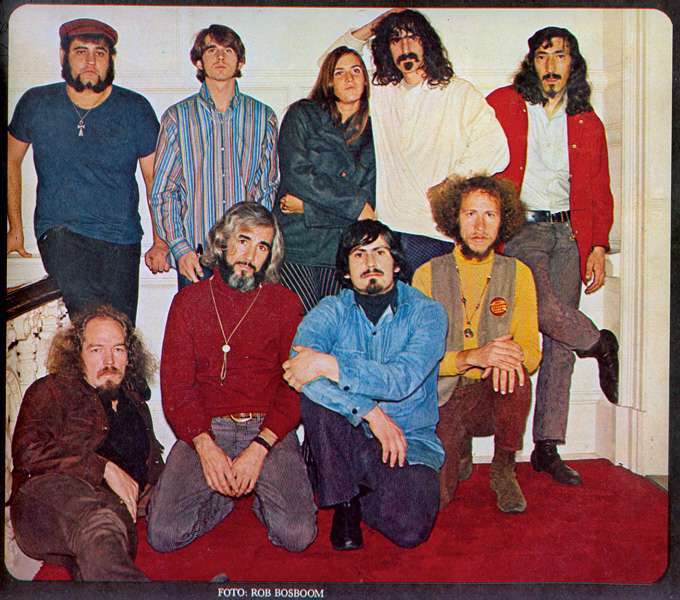
Mostrando entradas con la etiqueta °Frank Zappa and The Mothers Of Invention. Mostrar todas las entradas

Trouble Every Day - Frank Zappa And The Mothers Of Invention


El miércoles vi el alboroto (motín)...
Miraba a los policias en las calles
Los veía tirando rocas y cosas
Y ahogando al calor de los hechos
Escuché los reportes
Acerca de la ronda de whisky
Vi el humo y el fuego
Y el mercado consumíendose en fuego
Miraba mientras todos
En su calle esperaban su turno
Para pisar y aplastar y golpear y quebrar
Y acuchillar y destrozar y quemar

Así que veo y espero...


GUIÓN RADIOFÓNICO

Frank Zappa escribió Trouble Every Day en Los Angeles (en la residencia del químico de las metanfetaminas al que el mismo Zappa se refiere como Wild Bill the Mannequin-Fucker) después de ver nuevas portadas de The Watts Riots. Llamada originalmente The Watts Riot Song su temática principal es la violencia racial, la injusticia social y el periodismo sensacionalista. El estilo musical, con varias pistas de guitarra y una armónica, mucho más de cerca se asemeja a blues eléctrico que al Rock and roll.

Tom Wilson firmo a The Mothers of Invention después de escuchar Trouble Every Day pensando que eran una banda blanca que tocaba blues


DATOS TÉCNICOS DE LA ROLA

Título: Trouble Every Day
Traducción: Un problema cada día
Compositor: Frank Zappa
Intérprete: Frank Zappa And The Mothers Of Invention
Productor: Tom Wilson
A la venta: 27/06/1966
Formato: Sencillo
Lado B: Who Are the Brain Police?
Incluída en el L.P. Freak Out
Disquera: Verve
Orden al bat: 021

LETRA

Trouble Every Day
Un problema cada día
Well I'm about to get sick
From watchin' my TV
Been checkin' out the news
Until my eyeballs fail to see
I mean to say that every day
Is just another rotten mess
And when it's gonna change, my friend
Is anybody's guess

So I'm watchin' and I'm waitin'
Hopin' for the best
Even think I'll go to prayin'
Every time I hear 'em sayin'
That there's no way to delay
That trouble comin' every day
No way to delay
That trouble comin' every day

Wednesday I watched the riot . . .
Seen the cops out on the street
Watched 'em throwin' rocks and stuff
And chokin' in the heat
Listened to reports
About the whisky passin' 'round
Seen the smoke and fire
And the market burnin' down
Watched while everybody
On his street would take a turn
To stomp and smash and bash and crash
And slash and bust and burn

And I'm watchin' and I'm waitin'
Hopin' for the best
Even think I'll go to prayin'
Every time I hear 'em sayin'
That there's no way to delay
That trouble comin' every day
No way to delay
That trouble comin' every day

Well, you can cool it,
You can heat it . . .
'Cause, baby, I don't need it . . .
Take your TV tube and eat it
'N all that phony stuff on sports
'N all the unconfirmed reports
You know I watched that rotten box
Until my head begin to hurt
From checkin' out the way
The newsman say they get the dirt
Before the guys on channel so-and-so

And further they assert
That any show they'll interrupt
To bring you news if it comes up
They say that if the place blows up
They will be the first to tell,
Because the boys they got downtown
Are workin' hard and doin' swell,
And if anybody gets the news
Before it hits the street,
They say that no one blabs it faster
Their coverage can't be beat

And if another woman driver
Gets machine-gunned from her seat
They'll send some joker with a brownie
And you'll see it all complete

So I'm watchin' and I'm waitin'
Hopin' for the best
Even think I'll go to prayin'
Every time I hear 'em sayin'
That there's no way to delay
That trouble comin' every day
No way to delay
That trouble comin' every day

Hey, you know something people?
I'm not black
But there's a whole lots a times
I wish I could say I'm not white

Well, I seen the fires burnin'
And the local people turnin'
On the merchants and the shops
Who used to sell their brooms and mops
And every other household item
Watched the mob just turn and bite 'em
And they say it served 'em right
Because a few of them are white,
And it's the same across the nation
Black and white discrimination
Yellin' "You can't understand me!"
'N all that other jazz they hand me
In the papers and TV and
All that mass stupidity
That seems to grow more every day
Each time you hear some nitwit say
He wants to go and do you in
Because the color of your skin
Just don't appeal to him
(No matter if it's black or white)
Because he's out for blood tonight

You know we got to sit around at home
And watch this thing begin
But I bet there won't be many live
To see it really end
'Cause the fire in the street
Ain't like the fire in the heart
And in the eyes of all these people
Don't you know that this could start
On any street in any town
In any state if any clown
Decides that now's the time to fight
For some ideal he thinks is right
And if a million more agree
There ain't no Great Society
As it applies to you and me
Our country isn't free
And the law refuses to see
If all that you can ever be
Is just a lousy janitor
Unless your uncle owns a store
You know that five in every four
Just won't amount to nothin' more
Gonna watch the rats go across the floor
And make up songs about being poor

Blow your harmonica, son!

Bueno estoy a punto de enfermarme
De ver televisión
He estado checando las noticias
Hasta que mis ojos dejaron de ver
Quiero decir eso todos los días
Es sólo otro lío podrido
Y cuando va a cambiar, mi amigo
Nadie lo sabe

Así que veo y espero
Esperando lo mejor
Hasta pienso en ir a rezar
Cada vez que los oigo diciendo
Que no hay manera de detenerlos
Que los problemas vienen cada día
No hay manera de pararlos
Que los problemas vienen cada día

El miércoles vi el alboroto (motín)…
Miraba a los policias en las calles
Los veía tirando rocas y cosas
Y ahogando al calor de los hechos
Escuché los reportes
Acerca de la ronda de whisky
Vi el humo y el fuego
Y el mercado consumíendose en fuego
Miraba mientras todos
En su calle esperaban su turno
Para pisar y aplastar y golpear y quebrar
Y acuchillar y destrozar y quemar

Así que veo y espero…

Bueno, puedes enfriarlo,
Puedes calentarlo…
Porque, nena, no lo neceito…
llevate tu televisor de tubo y cómetelo
Y todas esas cosas chistosas de los deportes
Y todos los reportes sin confirmar
Tu sabes que yo veo esa caja podrida
Hasta que micabeza comienza a doler
De ver la manera
En la que el periodista dice como obtienen la suciedad
Antes que los tipos de canal tal y tal

Y además afirmaban
Que interrumpirían cualquier programa para dar las noticias
Decían que si el lugar etallaba
Ellos serían los primeros en decirlo,
Debido a que los chicos se fueron al centro
Trabajan duro y les va de maravilla,
Y si alguien tiene la noticia
Antes de que llegue a la calle,
Dicen que nadie chismorrea más rápido
Su cobertura no puede ser vencida


MÚSICOS

Frank Zappa - guitarra, armónica, platillos, pandereta y voz
Ray Collins - armónica, platillos, efectos sonoros, pandereta, voz y crótalos
Jimmy Carl Black – percusión, batería y voz Roy Estrada - bajo, voz, guitarrón y voz soprano
Elliot Ingber - guitarra rítmica y guitarra líder


INTÉRPRETE

Frank Zappa And The Mothers Of Invention: Baltimore

Frank Vincent Zappa expandió su carrera por más de 30 años hasta su muerte como compositor, cantante, guitarrista, productor y director de películas, habiendo escrito para rock, jazz, música electrónica y orquestal. Diseñó portadas y grabó más de 60 álbumes ya con The Mothers of Invention como en solitario.

TROUBLE EVERY DAY VIENE EN EL L.P. FREAK OUT

La revista Rolling Stone clasifica a Freak Out como el número 243 entre los 500 discos más importantes de todos los tiempos

VERSIÓN INGLESA

LADO A
1. "Hungry Freaks, Daddy"
2. "I Ain't Got No Heart"
3. "Who Are the Brain Police?"
4. "Go Cry on Somebody Else's Shoulder"
5. "Motherly Love"
6. "How Could I Be Such a Fool?"


LADO B
1. "Wowie Zowie"
2. "You Didn't Try to Call Me"
3. "Any Way the Wind Blows"
4. "I'm Not Satisfied"
5. "You're Probably Wondering Why I'm Here"


VERSIÓN ESTADOUNIDENSE
*
LADO A
1. "Trouble Every Day"
2. "Help, I'm a Rock"
1. Okay To Tap Dance
2. In Memoriam, Edgar Varèse
3. It Can't Happen Here


*
LADO B
1. "The Return of the Son of Monster Magnet" (Unfinished Ballet in Two Tableaux)
1. Ritual Dance of the Child-Killer
2. Nullis Pretii (No commercial potential)


Freak Out! Es para los críticos uno de los primeros álbumes de rock conceptuales. Grabado por The Mothers of Invention es una visión satírica de Frank Zappa de la percepción de la cultura popular estadounidense y es uno de los primeros discos dobles de rock. Producido por Tom Wilson quien, a decir de Zappa siempre creyó que se trataba de un grupo de blues blanco.

OTRAS VERSIONES

Mick Farren

Help, I'm a rock - Frank Zappa And The Mothers Of Invention


¡Alguien, por favor, por favor!
Ayuda, soy una roca, ayuda, soy una roca…
Caray, es una carga ser una roca
Desearía ser cualquier otra cosa excepto una roca
Demonios, hasta desearía ser un policia
Oye, sabes que, tal vez si practicara, tu sabes
Tal vez si pasara el examen de manejo
Podría tener una oportunidad manejando un camión y recogiendo a algunos raros
¡Frente a la casa de Ben Franks, cierto!

¡Ayuda soy un policia, ayuda soy un policia, ayuda soy un policia!
Es una carga ser un policia, creo que mejor desearía ser el alcalde
Siempre me pregunté qué sería al crecer, tú sabes...

Versión Corta


GUIÓN RADIOFÓNICO

Pese a que Frank Zappa no usaba drogas, su obra maestra para escuchar con audífonos Help, I’m a Rock puso en marcha infinidad de viajes con LSD en 1966. Este rock sí que es rock ácido.

Zappa explicó estos nueve minutos de locura, como el resultado de un montón de gente jugando en el estudio. 'Fue una cosa que vomitó', dijo Zappa, una década después. 'Lo que estaba sucediendo era lo que estaba en el aire esa noche'. Resultó que aquellos eran músicos de primer nivel lo cual hizo que la pieza se extendiera en lo que fue un ejercicio tanto de free jazz como de música sicodélica. 'Tenga en cuenta la interesante estructura formal' resaltaba Zappa en las notas del disco, donde también mencionaba que el album estaba dedicado a Elvis Presley.

Help, I’m a Rock contenida en el primer disco de The Mothers of Invention, entrega a sus admiradores la promesa de un Freak Out!Con una fuerte dosis de parodias grasosas y dip-doo-wop de mierda.

El joven Zappa se autocapacita para utilizar el multitrack y produce pistas con gritos, graznidos, conversaciones extrañas, cantos tribales, un orgasmo femenino, sonidos guturales y otros producidos por las lenguas. Un crítico llamó a este disco experimental 'el mayor estímulo para la industria de la aspirina desde el impuesto sobre la renta'

Help, I’m a Rock es una suite en tres movimientos: Okay to Tap Dance, In Memoriam Edgar Varese y It Can’t Happen Here.


DATOS TÉCNICOS DE LA ROLA

Título: Help, I'm a rock
Traducción: Ayuda, soy una roca
Compositor: Frank Zappa
Intérprete: Frank Zappa And The Mothers Of Invention
Productor: Tom Wilson
A la venta: 27/06/1966
Formato: L.P.
Incluída en el L.P. Freak Out
Disquera: Verve
Orden al bat: 022

LETRA

Help, I'm a rock
Ayuda, soy una roca
Help I'm a rock, help I'm a rock, help I'm a rock!
Ahahahahahahaaa
Help I'm a rock, help I'm a rock, help I'm a rock!
Somebody, please, please!
Help I'm a rock, help I'm a rock...
Wow man, it's a drag being a rock
Help I'm a rock...
I wish I was anything but a rock
Heck, I'd even like to be a policeman
Hey, you know what, you know maybe if I practised, you know
Maybe if I passed my driving test
I could get a gig drivin' that bus and pick some freaks up
In front of Ben Franks, right!

Help I'm a cop, help I'm a cop, help I'm a cop!
(Help I'm a rock…), help I'm a cop, help I'm a cop!
It's a drag being a cop, I think I'd rather be the mayor
Always wondered what I was gonna be when I grew up, you know
Always wondered whether or not, whether or not I could make it,
You know, in society, because,
You know, it's a drag when you're rejected
So I tore the cover off a book of matches and I sent in
And I got this letter back that said, UHU, AHA

It can't happen here
I'm telling you, my dear
That it can't happen here
Because I been checkin' it out, baby
I checked it out a couple a times, hmmmmmmmm
And I'm telling you
It can't happen here
Oh darling, it's important that you believe me
(Bop bop bop bop)
That it can't happen here

Who could imagine that they would freak out somewhere in Kansas…
Kansas Kansas tototototodo
Kansas Kansas
Who could imagine that they would freak out in Minnesota…
Mimimimimimimi Minnesota, Minnesota, Minnesota
Who could imagine…

Who could imagine
That they would freak out in Washington, D.C.
D.C. D.C. D.C. D.C. D.C.
It can't happen here
Ba ba ba ba ba ba ba ba
It can't happen here
Everybody's safe and it can't happen here
No freaks for us
It can't happen here
Everybody's clean and it can't happen here
No, no, it won't happen here
I'm telling you it can't
It won't happen here
(Bop bop didi bop didi bop bop bop)
Plastic folks, you know
It won't happen here
You're safe, mama
You're safe, baby
You just cook a TV dinner
And you make it
(Bop bop bop)
No no no no
Oh, we're gonna get a TV dinner and cook it up
Go get a TV dinner and cook it up
Cook it up
Oh, and it won't happen here
(No no no no no no no no no no no
Man you guys are really safe
Everything's cool).
Who could imagine
Who could imagine
That they would freak out in the suburbs!

I remember (tu-tu)
I remember (tu-tu)
I remember (tu-tu)
They had a swimming pool
I remember (tu-tu)
I remember (tu-tu)
They had a swimming pool
I remember (tu-tu)
I remember (tu-tu)
They had a swimming pool.
And they thought it couldn't happen here
(duh duh duh duh duh)
They knew it couldn't happen here
They were so sure it couldn't happen here
But…

Suzie…
Yes yes yes--I've always felt that
Yes I agree man, it really makes it…yeah…
It's a real THING, man
And it really makes it
(Makes it)

Suzie, you just got to town,
And we've been, we've been very interested
In your development.
Forget it!
Hmmmmmmmmm
(It can't happen here)

¡Ayuda, soy una roca, ayuda, soy una roca, ayuda, soy una roca!
Ahahahahahahaaa
¡Ayuda, soy una roca, ayuda, soy una roca, ayuda, soy una roca!
¡Alguien, por favor, por favor!
Ayuda, soy una roca, ayuda, soy una roca…
Caray, es una carga ser una roca
Ayuda soy una roca...
Desearía ser cualquier otra cosa excepto una roca
Demonios, hasta desearía ser un policia
Oye, sabes que, tal vez si practicara, tu sabes
Tal vez si pasara el examen de manejo
Podría tener una oportunidad manejando un camión y recogiendo a algunos raros
¡Frente a la casa de Ben Franks, cierto!

¡Ayuda soy un policia, ayuda soy un policia, ayuda soy un policia!
¡(Ayuda soy una roca…), ayuda soy un policia, ayuda soy un policia!
Es una carga ser un policia, creo que mejor desearía ser el alcalde
Siempre me pregunté qué sería al crecer, tú sabes
Siempre me pregunte si lo lograría,
Ya sabes, en la sociedad, porque,
Tú sabes, es una carga ser rechazado
Así que arranqué la cubierta de una caja de cerillos y la envíe
Y me enviaron de vuelta una carta que decía, UHU, AHA

No puede suceder aquí
Te lo digo, querida
Que no puede suceder aquí
Porque lo he estado revisando, nena
Lo revisé un par de veces, hmmmmmmmm
Y te lo digo
No puede suceder aquí
Oh querida, es importante que tú me creas
(Bop bop bop bop)
Que no puede suceder aquí

Quién podría imaginar que ellos se impresionarían en algún lugar de Kansas...
Kansas Kansas tototototodo
Kansas Kansas


MÚSICOS

Frank Zappa - guitarra, armónica, platillos, pandereta y voz
Ray Collins - armónica, platillos, efectos sonoros, pandereta, voz y crótalos
Jimmy Carl Black – percusión, batería y voz Roy Estrada - bajo, voz, guitarrón y voz soprano
Elliot Ingber - guitarra rítmica y guitarra líder


INTÉRPRETE

Frank Zappa And The Mothers Of Invention: Baltimore

Frank Zappa adquirió en su adolescencia el gusto por la percusión escuchando a compositores de vanguardia como Edgard Varèse y el ritmo del blues de los cincuentas.

Comenzó a escribir música clásica cursando la secundaria mientras al mismo tiempo tocaba la batería en bandas de rhythm and blues, aunque más tarde la cambió por la guitarra eléctrica. Fue un compositor y artista autodidacta y sus diversas influencias musicales lo llevaron a crear música a menudo imposible de clasificar. Desde la combinación de canciones convencionales de rock con formatos para improvisaciones sonoras colectivas, hasta sus aportaciones al jazz y a la música clásica.

Sus letras reflejan, con amplio sentido del humor, refleja una visión iconoclasta sobre los procesos sociales y políticos establecidos, las estructuras y los movimientos. Fue un estridente crítico de la educación en general y la religión organizada. Frank Zappa fue también un defensor franco y apasionado de la libertad de expresión, la autoeducación, la participación política y la abolición de la censura.

HELP, I'M A ROCK VIENE EN EL L.P. FREAK OUT

La revista Rolling Stone clasifica a Freak Out como el número 243 entre los 500 discos más importantes de todos los tiempos

VERSIÓN INGLESA

LADO A
1. "Hungry Freaks, Daddy"
2. "I Ain't Got No Heart"
3. "Who Are the Brain Police?"
4. "Go Cry on Somebody Else's Shoulder"
5. "Motherly Love"
6. "How Could I Be Such a Fool?"


LADO B
1. "Wowie Zowie"
2. "You Didn't Try to Call Me"
3. "Any Way the Wind Blows"
4. "I'm Not Satisfied"
5. "You're Probably Wondering Why I'm Here"


VERSIÓN ESTADOUNIDENSE
*
LADO A
1. "Trouble Every Day"
2. "Help, I'm a Rock"
1. Okay To Tap Dance
2. In Memoriam, Edgar Varèse
3. It Can't Happen Here


*
LADO B
1. "The Return of the Son of Monster Magnet" (Unfinished Ballet in Two Tableaux)
1. Ritual Dance of the Child-Killer
2. Nullis Pretii (No commercial potential)


El repertorio original de The Mothers of Invention se basaba en el rhytm & blues pero después de que Frank Zappa se unió a la banda, ésta tomó el valor para grabar sus propias composiciones. Para el contenido de Freak Out!, The Mothers abarcan un rango que va del rhythm & blues, el doo-wop y el blues clásico a los arreglos orquestales y collages de sonidos orientados al rock.

Estas características, que pasaron desapercibidas en los Estados Unidos, convirtieron a The Mothers of Invention en un grupo de culto en Europa.

Absolutly Free - Frank Zappa And The Mothers Of Invention


Rola: Absolutly Free
Traducción: Absolutamente libre
Intérprete: Frank Zappa/The Mothers Of Invention
Compositor: Frank Zappa
Disco: We're Only In It For The Money
Productor: Frank Zappa

HISTORIA

"Absolutely Free" is a song written by Frank Zappa and released on the Mothers of Invention album We're Only in It for the Money in 1968. The song is not to be confused with the Mothers of Invention album of the same name.

Like many of the songs on We're Only in It for the Money, "Absolutely Free" criticizes the hippie movement and the Summer of Love. The song's lyrics are a parody of psychedelia, especially the idea of expanding one's consciousness through the use of drugs. To this end, the song frequently mentions the word "discorporate", which is explained by Zappa in the spoken introduction to the song ("The first word in this song is discorporate. It means to leave your body"). The lyrics also reference the song "Mellow Yellow" by singer-songwriter Donovan, who is often associated with the hippie movement ("The dreams as they live them are all mellow yellow").

On some pressings of the album, especially on earlier releases, two lines of the lyrics were censored. The first is the sentence "I don't do publicity balling for you anymore", uttered at the very beginning of the song by the character of Suzy Creamcheese. The word "balling" was cut from this line. The other line that was censored ("Flower power sucks!") was cut entirely

The song starts off with a piano intro, followed by a brief spoken part containing the aforementioned utterances by Zappa and Suzy Creamcheese. From then on, the song carries on with a 3/4 motif, featuring a celesta, acoustic guitar, and a heavy use of reverb and other sound effects, which give the song a pseudo-psychedelic feel.


DATOS DE LA GRABACIÓN


Duración: 03:28
Año: 1968
Formato: L.P.
A la venta: 01/03/1968
Disquera: Verve


MÚSICOS

Frank Zappa – guitar, piano, lead vocals, weirdness & editing
Dick Barber – snorks
Jimmy Carl Black – trumpet, drums, vocals, indian of the group
Roy Estrada – electric bass, vocals, asthma
Bunk Gardner – all woodwinds, mumbled weirdness
Billy Mundi – drums, vocals, yak & black lace underwear
Don Preston – keyboards, retired
Euclid James "Motorhead" Sherwood – baritone saxophone, soprano saxophone, road manager, all purpose weirdness & teen appeal
Suzy Creamcheese – telephone voice
Ian Underwood – piano, woodwinds, wholesome
Pamela Zarubica – vocals
Gary Kellgren – "the one doing all the creepy whispering" (i.e., interstitial spoken segments)
Spider Barbour – vocals
Dick Kunc – "cheerful interruptions" vocal
Vicki Kellgren – additional telephone vocals
Sid Sharp – orchestral arrangements


ESCUCHA LA ROLA


LETRA

Original
Traducción
I don’t do publicity balling for you anymore...

The first word in this song is discorporate, It means: to leave your body

Discorporate and come with me
Shifting; drifting
Cloudless; starless
Velvet valleys
and a sapphire sea
wah wah

Unbind your mind
There is no time
To lick your stamps
And paste them in
Discorporate
And we will begin…
wah wah!

Flower power sucks!

Diamonds on velvets on goldens on vixen
On comet on cupid on Donner & Blitzen
On up and away and afar and a go-go
Escape from the weight of your corporate logo!

Unbind your mind
There is no time
Boin-n-n-n-n-n-g
To lick your stamps
And paste them in
Discorporate
And we’ll begin
Freedom! Freedom!
Kindly loving!
You’ll be absolutely free
Only if you want to be

Dreaming on cushions of velvet and satin
To music by magic by people that happen
To enter the world of a strange purple Jello
The dreams as they live them are all
Mellow yellow

Unbind your mind
There is no time
Boin-n-n-n-n-n-g
To lick your stamps
And paste them in
Discorporate
And we’ll begin
Freedom! Freedom!
Kindly loving!
You’ll be absolutely free
Only if you want to be
You’ll be absolutely free
Only if you want to be

Ya no me encamo más para hacerte promoción

La primera palabra de esta canción es "Discorpórate", quiere decir "abandona tu cuerpo"

Discorpórate y ven conmigo
moviéndonos; vagando
sin nubes; sin estrellas
valles de terciopelo
y un mar de zafiro
wah wah

Desata tu mente
no hay tiempo
para lamer tus sellos
y pegarlos
discorpórate
y empezaremos…
¡wah! ¡wah!

¡El flower power apesta!

Diamantes en terciopelos en dorados en una zorra
en una cometa y cupido en donner & blitzen
arriba y lejos y más lejos y a go-go
¡escapa del peso de tu logotipo corporativo!

Desata tu mente
no hay tiempo
boin-n-n-n-n-n-g
para lamer tus sellos
y pegarlos
discorpórate
y empezaremos
¡Libertad! ¡libertad!
¡amor bondadoso!
Seras absolutamente libre
solo si quieres serlo

Soñando en cojines de terciopelo y satén
con música por arte de magia de gente que resulta
que entra en el mundo de una extraña gelatina púrpura
los sueños mientras los viven son todos amarillo suave

Desata tu mente
no hay tiempo
boin-n-n-n-n-n-g
para lamer tus sellos
y pegarlos
descorporizate
y empezaremos
¡Libertad! ¡libertad!
¡Amor bondadoso!
Serás absolutamente libre
solo si quieres serlo
serás absolutamente libre
solo si quieres serlo


EL L.P. QUE CONTIENE LA ROLA

EXTERIOR

EXTERIOR

LADO A
1. "Are you hung up?"
2. "Who needs the peace corps?"
3. "Concentrantion moon"
4. "Mom & Dad"
5. "Telephone Conversation"
6. "Bow Tie Daddy"
7. "Harry, You're a Beast"
8. "What's the Ugliest Part of Your Body?"
9. "Absolutely Free"
10. "Flower Punk"
11. "Hot Poot"

LADO B
1. "Nasal Retentive Calliope Music"
2. "Let's Make the Water Turn Black"
3. "The Idiot Bastard Son"
4. "Lonely Little Girl"
5. "Take Your Clothes Off When You Dance"
6. "What's the Ugliest Part of Your Body? (reprise)"
7. "Mother People"
8. "The Chrome Plated Megaphone of Destiny"


We're Only in It For the Money is the third studio album by The Mothers of Invention, released in March 1968. The album peaked at number thirty on the Billboard 200. The album satirizes many aspects of 1960s culture, such as hippie culture and music.

In 1967, Zappa conceived an album, Our Man in Nirvana, which would combine the music of his band The Mothers of Invention with comedy routines by Lenny Bruce (who had performed with Zappa at The Fillmore in 1966).[1] However, when Sgt. Pepper's Lonely Hearts Club Band was released and hugely touted as the first concept album, Zappa, who already had released two (which Paul McCartney later stated had influenced Sgt. Pepper[2]) felt compelled to respond. Also, Zappa noticed its cultural effect, and felt that the then-popular flower power scene had and would continue to have a major influence on popular culture. Consequently, he decided to produce instead a satirical album that parodied every cynical aspect of the fad, Sgt. Pepper, and 1960s US society.[3] The song "Flower Punk" is based upon "Hey Joe", famously performed by Love, The Leaves, The Byrds, The Surfaris and Jimi Hendrix, who is himself pictured in the cover art. "Mother People" was featured in an episode of The Monkees ("Monkees Blow Their Minds"), which also featured Zappa and Michael Nesmith posing as each other. The only vestige of the original album idea in We're Only in It... is the phrase "Don't come in me, in me..." in the song "Harry, You're A Beast", a reference to a Lenny Bruce routine about ejaculation.

Cal Schenkel's design was intended as a parody of the cover for The Beatles' Sgt. Pepper's Lonely Hearts Club Band. The fold-out cover for Sgt. Pepper had a collage of famous people by Peter Blake on the outside front, a picture of the group with one member facing away from the camera on the back, and a head-shot portrait of the band on the inside. Zappa originally intended to use the cover as one would expect—front cover on the front, back cover on the back, and the inside group head-shot on the inside—but Zappa's record company demurred and turned the cover inside-out for release, putting the most blatant Sgt. Pepper parody (front cover very similar in its production; back cover showing a picture of the group with only one member facing toward the camera) on the inside and the head-shot portrait pastiche of the band on the outside. Next to Zappa's head on the back cover is a speech bubble that reads, "Is this phase one of Lumpy Gravy?". Respectively, Zappa's next album, Lumpy Gravy features a similar speech bubble that reads "Is this phase 2 of We're Only in It for the Money?" The 1986 Rykodisc release on CD featured the original photo restored to the front cover, but minus the group headshot. This release combined this album with Lumpy Gravy. In 1995, Zappa's estate authorized the rerelease of the original cover art with the headshot along with the original Verve records mix—as "Lumpy Gravy" was also reissued on its own with its original cover art and Verve Records mix. One section of the CD liner art features a series of badges, banknote, and facial hair cut-outs, satirizing those of Sgt. Pepper, with some differences; one badge features a small photograph of recording engineer Gary Kellgren and the other is a nipple. The banknote had a picture of a belly button in the middle.

Originally released in March 1968, the album eventually peaked at number thirty on the Billboard 200. Initial releases of the album had certain sections of songs edited or removed due to perceived offensiveness. These two sets of edits are often distinguished by the monikers "censored" and "heavily censored." However, these set of edits were sometimes applied inconsistently, so these two categories are inexhaustive.[5] Tracks affected by censor edits on all original versions: * "Concentration Moon": Gary Kellgren's whispered remark "I get to work with The Velvet Underground, which is as shitty a group as Frank Zappa's group" was cut. However, the Canadian release of the album keeps the line intact. Later Verve pressings (aka the "heavily censored" version) only removes part of the line, rendering it as "I get to work with the Velvet Underground, Frank Zappa's group."[5] * "Harry You're a Beast": The "Don't come in me, in me" verse was edited in order to hide the offending lyric by re-editing parts of the verse in the wrong way, and reversing parts of the song. This phrase is from Lenny Bruce's "To is a Preposition, Come is a Verb" routine.[5] * "Mother People": a verse containing the expletives 'fucking' and 'shitty' was replaced with a repeat of the first. The original verse was backmasked and appended to the track "Hot Poop" (even there, however, the word "fucking" has its "uck" part cut out to make it less obvious ).[5] Additional tracks affected by censor edits on the "heavily censored" versions: * "Who Needs the Peace Corps?": a spoken line "I will love the police as they kick the shit out of me" was cut out.[5] * "Absolutely Free": The spoken word lines "I don't do publicity balling for you any more" and remark "Flower power sucks" were removed.[5] * "Let's Make The Water Turn Black": Several lines of the song are removed, most notably the line about Ronnie and Kenny Williams' mother ("and I still remember Mama with her Apron and her pad). Zappa believed that the line was cut because a record company executive thought the line referred to a sanitary pad.[6]

INTÉRPRETE

Frank Zappa/The Mothers Of Invention: Baltimore

Frank Vincent Zappa was an American composer, singer-songwriter, electric guitarist, record producer, and film director. In a career spanning more than 30 years, Zappa wrote rock, jazz, electronic, orchestral, and musique concrète works. He also directed feature-length films and music videos, and designed album covers. Zappa produced almost all of the more than 60 albums he released with the band The Mothers of Invention and as a solo artist.

While in his teens, he acquired a taste for percussion-based avant-garde composers such as Edgard Varèse and 1950s rhythm and blues music. He began writing classical music in high school, while at the same time playing drums in rhythm and blues bands—he later switched to electric guitar. He was a self-taught composer and performer, and his diverse musical influences led him to create music that was often impossible to categorize. His 1966 debut album with the Mothers of Invention, Freak Out!, combined songs in conventional rock and roll format with collective improvisations and studio-generated sound collages. His later albums shared this eclectic and experimental approach, irrespective of whether the fundamental format was one of rock, jazz or classical. He wrote the lyrics to all his songs, which—often humorously—reflected his iconoclastic view of established social and political processes, structures and movements. He was a strident critic of mainstream education and organized religion, and a forthright and passionate advocate for freedom of speech, self-education, political participation and the abolition of censorship.

Zappa was a highly productive and prolific artist and gained widespread critical acclaim. Many of his albums are considered essential in rock and jazz history. He is regarded as one of the most original guitarists and composers of his time. He also remains a major influence on musicians and composers. He had some commercial success, particularly in Europe, and for most of his career was able to work as an independent artist. Zappa was posthumously inducted into the Rock and Roll Hall of Fame in 1995 and received the Grammy Lifetime Achievement Award in 1997.

Zappa was married to Kathryn J. "Kay" Sherman from 1960 to 1964. In 1967, he married Adelaide Gail Sloatman, with whom he remained until his death from prostate cancer in 1993. They had four children: Moon Unit, Dweezil, Ahmet Emuukha Rodan and Diva Thin Muffin Pigeen. Gail Zappa manages the businesses of her late husband under the name the Zappa Family Trust.

The Mothers of Invention was an American band active from 1964 to 1969, and again from 1970 to 1975. They mainly performed works by, and were the original recording group of, US composer and guitarist Frank Zappa (1940–1993), although other members have had the occasional writing credit.[1] The band's first album, in 1966, was a double LP named Freak Out!,[2] and they released four more albums in the following years. Zappa disbanded the original group in 1969, mainly because of financial issues, but also because Zappa felt that there was no public interest in their music.[1] After recording and releasing Hot Rats, Frank re-formed the group in 1970, with mostly new members and material. The new group came to be referred to as just "The Mothers" or "Frank Zappa & The Mothers" most of the time. In 1971, Zappa did an ambitious concept film/album project 200 Motels, but the group disbanded later that year after Zappa was attacked onstage during a London concert. During the coming years, Zappa released albums as "Zappa/Mothers" (Roxy & Elsewhere, 1974) or "Frank Zappa and the Mothers of Invention" (One Size Fits All, 1975) until he permanently dropped the "Mothers of Invention" moniker in 1976.

Initially, the group was named "The Soul Giants" and consisted of drummer Jimmy Carl Black, bass player Roy Estrada, saxophonist Davy Coronado, guitarist Ray Hunt, and vocalist Ray Collins. Some biographers report that Collins fought with Hunt in 1964 (according to Collins: "I never touched Hunt, I don't even remember shaking his hand"),[citation needed] after which Hunt quit the group and Frank Zappa took his place as guitarist - quickly becoming the leader of the group, which changed its name to "The Mothers" on Sunday, May 10, 1964 (that year's Mother's Day) The band's name was allegedly an abbreviation for "motherfuckers", which was a term used to describe good musicians at the time.

During late 1965, record producer Tom Wilson made a brief visit to a tavern where The Mothers were playing and offered them a contract and an advance of US$2,500. Guitarist Henry Vestine, later of Canned Heat, was an early member of the group, but suddenly quit, on the day the contract was signed, allegedly after hearing Frank Zappa's "Who Are The Brain Police?", which was "too much for Henry".[3] The Mothers and Wilson then spent several months and thousands of dollars recording and editing the band's first album, a double LP named Freak Out!,[2] and at the insistence of their record company, MGM Records, the group changed their name again, this time to "The Mothers of Invention". Their debut was released in 1966, and The Mothers of Invention subsequently went on tour.

MGM recorded sales of Freak Out! Amounted to a relatively poor 30,000 copies. The record label responded by cutting the band's budget for their next LP to US$11,000. The Mothers of Invention continued regardless, releasing Absolutely Free in 1967, We're Only in It for the Money in 1968 and Uncle Meat in 1969 under the leadership of Zappa. In 1969, Zappa disbanded the original Mothers of Invention. Estrada went on to form Little Feat with Lowell George, who had been in the Mothers for a few months in late 1968 and early 1969 but was reportedly fired by Zappa because of his drug use. In 1970, Zappa created a new incarnation of The Mothers which included Mothers' alumni Ian Underwood and Don Preston. This 'new' lineup also featured British-born drummer Aynsley Dunbar (exJohn Mayall's Bluesbreakers), multi-instrumentalist Ian Underwood (keyboards, guitar, woodwind, vocals) and Ruth Underwood (marimba, vibes), who had joined the original Mothers for the recording of Uncle Meat in 1969.