| Rola: | Mona |
|---|---|---|
| Intérprete: | Quicksilver Messanger Service | |
| Compositor: | Bo Diddley | |
| Disco: | Happy Trails | |
|
|
|
The song "Mona" was ranked number 88 on the list of the 100 Greatest Guitar Songs also of Rolling Stone. |
|
|
| Duración: | 07:01 |
| Año: | 1969 |
| Formato: | L.P. |
| A la venta: | 01/03/1969 |
| Disquera: | Capitol |
|
|
|
Gary Duncan - guitarra y voz Greg Elmore - batería David Freiberg - bajo, voz y violín |
|
|
|
|
|
|
|
Original
|
Traducción
|
|
Hey, Mona, hey hey hey hey, Mona, I'm gonna tell you what I'm gonna do, I'm gonna build my house next door to you, Can I make love to you once in a while? Maybe we could do a little kissing and tellin' lies. When I come out on the front, girl, You'll listen to my heart goin' bumpity bump. I need you baby and it ain't no lie, When I'm through lovin' I'll surely die. |
|
|
|

LADO A 1. "Who Do You Love - Part 1" 2. "When You Love" 3. "Where You Love" 4. "How You Love" 5. "Which Do You Love" 6. "Who Do You Love - Part 2" |

LADO B 1. "Mona" 2. "Maiden of the Cancer Moon" 3. "Calvary" 4. "Happy Trails" |
|
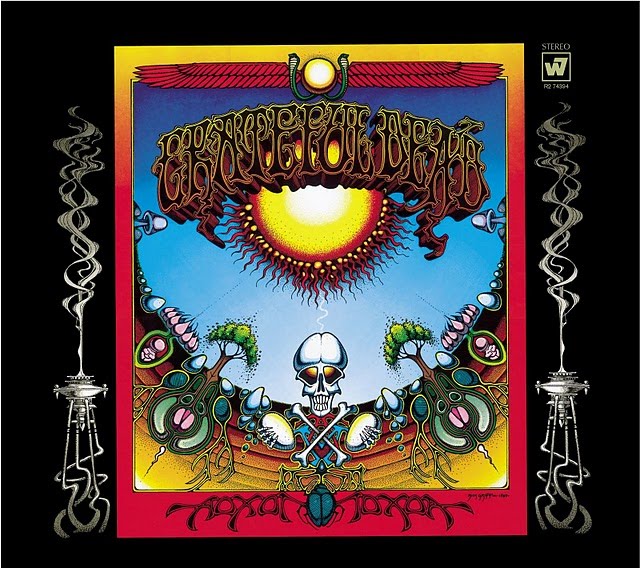
Happy Trails is the second album of the American band Quicksilver Messenger Service. Happy Trails consists mainly of a performance cover of Bo Diddley's - aka Ellas McDaniel - "Who Do You Love?" spread out over 25 minutes. The live portions of the album were recorded at the Fillmore East and at the Fillmore West. The second half of the album consists of an almost continuous suite. Beginning with another Bo Diddley song ("Mona"), guitarist Gary Duncan's "Maiden of the Cancer Moon" follows and the album closes with "Calvary", which manifested itself during a studio acid trip. As a coda, the band sing the theme tune from Roy Rogers' western television show, which lends its title to the album. The record was released by Capitol records in stereo. In 2003, the album was ranked number 189 on Rolling Stone magazine's list of the 500 greatest albums of all time. |
|
|
 Quicksilver Messanger Service: San Francisco
Quicksilver Messenger Service is an American psychedelic rock band, formed in 1965 in San Francisco and is considered one of the leading acts on the city's psychedelic scene in the mid-to-late 1960s. Quicksilver Messenger Service gained wide popularity in the Bay Area and, through their recordings, with psychedelic rock enthusiasts around the globe and several of their albums ranked in the Top 30 of the Billboard Pop charts. Although not as commercially successful as contemporaries Jefferson Airplane and The Grateful Dead, QMS was integral to the beginnings of their genre. With their jazz and classical influences, as well as a strong folk background, the band attempted to create a sound that was individual and innovative. Member Dino Valenti drew heavily on musical influences he picked up during the folk revival of his formative musical years. The style he developed from these sources is evident in Quicksilver Messenger Service's swung rhythms and twanging guitar sounds. David Freiberg, a folk-guitarist friend of Valente's, was recruited to the group. He had previously been in a band with Paul Kantner and David Crosby but like Cipollina he had been arrested and briefly jailed for marijuana possession and had just been released. "We were to take care of this guy Freiberg", Cipollina recalled, and though they had never met before, Freiberg was integrated into the group. The band also added Skip Spence on guitar and began to rehearse at Marty Balin's club, the Matrix. Balin, in search of a drummer for the band he was organizing (which became Jefferson Airplane) convinced Spence to switch instruments and groups. To make up for his poaching of Spence, Balin suggested that they contact drummer Greg Elmore and guitarist–singer Gary Duncan, who had played together in a group called The Brogues. This new version of the group played its first concert performance in December 1965, playing for the Christmas party of the comedy troupe "The Committee". Drummer Greg Elmore and guitarist Jim Murray were added to fill out the original band. It was a band without a name, Cipollina recalled: "Jim Murray and David Freiberg came up with the name. Me and Freiberg were born on the same day, and Gary and Greg were born on the same day, we were all Virgos and Murray was a Gemini. And Virgos and Geminis are all ruled by the planet Mercury. Another name for Mercury is Quicksilver. And then, Quicksilver is the messenger of the Gods, and Virgo is the servant, so Freiberg says 'Oh, Quicksilver Messenger Service'." Jim Murray left the group not long after they performed at the Monterey International Pop Festival in June 1967. The band began a period of heavy touring on the West Coast of the United States where they built up a solid following and featured on many star-studded bills at the Avalon Ballroom and the Fillmore West. Sound engineer (and infamous LSD chemist) Owsley Stanley regularly recorded concerts at major San Francisco venues during this period, and his archive includes many QMS live performances from 1966–67, which were released on his Bear Recordings label in 2008-2009. QMS initially held back from signing a record deal at the time but eventually signed to Capitol Records in late 1967, becoming the last of the top-ranked San Francisco bands to sign with a major label. Capitol was the only company that had missed out on signing a San Francisco “hippie” band during the first flurry of record company interest and, consequently, Quicksilver Messenger Service was able to negotiate a better deal than many of their peers. At the same time, Capitol signed the Steve Miller Band, with whom Quicksilver Messenger Service had appeared on the movie and soundtrack album Revolution, together with the group Mother Earth. Quicksilver Messenger Service released their eponymous debut album in 1968. It was followed by Happy Trails, released in early 1969 and largely recorded live at the Fillmore East and the Fillmore West. According to David Freiberg, at least one of the live tracks was augmented with studio overdubs and the tracks "Calvary" and "Lady of the Cancer Moon" were recorded in the studio just before Gary Duncan left the band. These albums, which have been hailed as "two of the best examples of the San Francisco sound at its purest" define the classic period in the group's career and showcase their distinctive sound, emphasizing extended arrangements and fluid twin-guitar improvisation. Cipollina's highly melodic, individualistic lead guitar style, combined with Gary Duncan's driving rhythm guitar, feature a clear jazz sound, a notable contrast to the heavily amplified and overdriven sound of contemporaries like Cream and Jimi Hendrix. In 2003 Happy Trails was rated at #189 in the Rolling Stone Top 500 albums survey, where it was described as "the definitive live recording of the mid-Sixties San Francisco psychedelic-ballroom experience". Archetypal QMS songs include the elongated, continually re-titled suite based on Bo Diddley's "Who Do You Love?", featured on Happy Trails. Duncan left the group not long after the recording of Happy Trails; according to David Freiberg, this was largely because of his escalating problems with opiates and amphetamines. His 'farewell' performances were the studio recordings that ended up on Happy Trails and a final live performance with the band on New Year's Eve 1969. Duncan recalled 18 years later: "Well, let's put it this way, at the end of 1968, I was pretty burned out. We'd been on the road for, really, the first time in our lives. I just left for a year. I didn't want to have anything to do with music at all. And I left for a year and rode motorcycles and lived in New York and L.A. and just kind of went crazy for about a year." Freiberg later recalled that Duncan's departure shook the core of the band: "Duncan was the "engine" man, it just didn’t WORK without him … for me. I was really … I was devastated … ". For their 1969 album Shady Grove, Duncan did not participate, replaced by renowned English session keyboardist Nicky Hopkins, who had played on scores of hit albums and singles by acts like The Kinks, The Rolling Stones, The Who and Steve Miller, among many others. Hopkins' virtuoso piano boogie dominates the album, giving it a unique sound within the Quicksilver catalog. |