Mostrando entradas con la etiqueta 1969. Mostrar todas las entradas

Lalena - Deep Purple


DATOS GENERALES DE LA ROLA

Rola: Lalena
Traducción: Lalena
Compositor: Donovan Leicht
Intérprete: Deep Purple
Incluída en el L.P. Deep Purple III
Orden al bat: 155

GUIÓN RADIOFÓNICO

Cuando Donovan compuso Lalena, sincretizó el nombre de la actriz alemana Lotte Lenya, quin lo había impresionado con su actuación en la versión cinematográfica de la Ópera de los Tres Centavos compuesta por Kurt Weill marido de la misma Lotte) y Bertold Brecht. Recuerda Donovan: "Pensé: De acuerdo, es una callejera, pero en la historia del mundo, en todas las naciones, la mujer ha jugado varios roles de monja, prostituta, madre, doncella o esposa.

Este aspecto de poder sexual es muy prominente. Las mujeres juegan roles a los que son empujadas y los actúan de la mejor forma que ellas pueden, así es que la manera en la que yo estoy describiendo el carácter de Lotte Lenya es jugando. Es un personaje que vive marginado en los límites de la sociedad".

Esto podría explicar el verso "That's your lot in life, Lalena/I can't blame ya, Lalena" ("Es la vida que te tocó, Lalena/No te culpo").

Deep Purple, graba Lalena en su disco epónimo de 1969, un año después de que se publicara la versión de Donovan, siendo este el único "cover" utilizado por la banda inglesa, a diferencia de sus discos anteriores. Esta versión es una de las rolas más calmadas y tranquilas rolas en el repertorio de Deep Purple y nunca volvieron a tocarla en vivo después de 1969.

En 1968, muchas niñas fueron llamadas Lalena, en honor a la rola y nosotros conocemos a una de ellas: Amanda Lalena, Amandititita, la hija del Rockdrigo.


DATOS DE LA GRABACIÓN

Duración: 05:03
Productor: Derek Lawrence
Año: 1969
Formato: L.P.
A la venta: 21/06/1969
Disquera: Harvest


MÚSICOS

Ritchie Blackmore - guitar
Rod Evans - lead vocals
Nick Simper - bass, backing vocals
Jon Lord - Hammond organ, keyboards, backing vocals
Ian Paice - drums


LETRA

Lalena
Lalena
When the sun goes to bed
That's the time you raise your head
That's your lot in life, Lalena
Can't blame ya
Lalena

Arty-tart, la-de-da
Can your part get much sadder?
That's your lot in life, Lalena
Can't blame ya
Lalena

Run your hand through your hair
Paint your face with despair
That's your lot in life, Lalena
Can't blame ya
Lalena

Run your hand through your hair
Paint your face with despair
That's your lot in life, Lalena
Can't blame ya
Lalena

When the sun goes to bed
That's the time you raise your head
That's your lot in life, Lalena
I can't blame ya
Lalena

Arty-tart, oh, so la-de-da
Can your part ever get, ever get much sadder?
That's your lot in life, Lalena
I can't blame ya
No, no, no, Lalena
Oh, Lalena


LALENA VIENE EN EL L.P. DEEP PURPLE III


LADO A
1. "Chasing Shadows"
2. "Blind"
3. "Lalena"
4. "Fault Line / The Painter"


LADO B
1. "Why Didn't Rosemary"
2. "Bird Has Flown"
3. "April"


Este es el tercer disco de Deep Purple, el último de la primer alineación también conocida como Mark I en la que aún estaba el vocalista Rod Evans y el bajista Nick Simper, y presumiblemente el mejor trabajo de esta Mark I. No sólo eso, sino que es uno de las mejores entregas de cualquier alineación de Deep Purple, opacada apenas por las joyas del ‘71-‘72. Este disco, también conocido por los fans como el Deep Purple III, quizá es su trabajo más psicodélico como banda, sí, más incluso que el Shades, y bastante superior, ya que no hay piezas vacías de pop, no hay malos covers (de hecho el único cover del disco es conmovedor!), no hay portadas desabridas, no hay letras vulgares, no hay piezas monótonas de rock como las que saldrían en la segunda mitad de los 70’s, y es un álbum perfectamente balanceado, con un gusto impecable, una gran variedad de estilos que van desde la delicadísima balada “Lalena” hasta tremendos blues rockers como “Why Didn't Rosemary” o “Bird Has Flown”, experimentales como “Fault Line” hasta pasajes entre clásicos-artísticos-progresivos como la inspiradísima “April”, que a pesar de su duración es una obra muy bien lograda y cuidada hasta el más mínimo detalle.

Este disco dan diverso tiene tan buenos acabados por estar hecho entre los límites de la pasión de Richie por los riffs pesados e inteligentes de guitarra (y afortunadamente aquí Blackmore tiene mucho más peso que en el Taliesyn) y por otro lado balanceado con la adoración de Jon por la música clásica que los llevó a territorios cercanos al prog. Bueno, sin contar el “Concerto For Group & Orchestra”. En este punto parece que la banda aún no se decidía por alguna de las dos corrientes que presentaban, los rockers furiosos y sanguinarios, hechos con una maestría total y con un trabajo de guitarra aún en desarrollo, pero que ya daba nota de un genio en potencia a las 6 cuerdas. Y por otro lado, un sonido más tendiente a lo clásico, a buscar suites elaboradas y detalladas con el teclado de Lord como líder, creando estructuras complejas y mezclando sonidos que recuerdan en su elaboración a Procol Harum, Pink Floyd, Jethro Tull y King Crimson. Con en In Rock está claro cual fue la corriente que prevaleció en la Deep Purple, y me parece una decisión acertada; Lord aceptó la decisión y aún así supo mantenerse como un referente básico y un tremendo tecladista, aunque siempre me ha quedado la idea de que Deep Purple también pudo haber entrado a las grandes ligas del Art-Progresive.

Pero la cuestión es que este disco no pegó no porque no fuera bueno, sino por esas cuestiones inexplicables del destino. El álbum es sólido de principio a fin, y algunos de los fans de Purple lo consideran su obra maestra por esa mezcla perfecta de psicodelia, de buenos y potentes riffs, solos creativos, y la dosis de elementos clásicos y complejidad musical proporcionados por Lord y Blackmore en un balance perfecto. Si Warner se hubiera avivado y hubiera dado apoyo y difusión al disco quién sabe si el disco hubiera sido un enorme trancazo como merecía ser, si Evans y Simper se hubieran mantenido y si el grupo hubiese seguido por terrenos del art-prog. Pero el hubiera no existe, y el hecho de que el disco haya pasado desapercibido por una broma cruel del destino no significa que no sea maravilloso ni que no lo podamos disfrutar hoy en día en toda su grandeza.

INTÉRPRETE

Deep Purple: Hertford

Deep Purple are an English rock band formed in Hertford in 1968. Along with Led Zeppelin and Black Sabbath, they are considered to be among the pioneers of heavy metal and modern hard rock, although some band members believe that their music cannot be categorised as belonging to any one genre. The band incorporated classical music, blues-rock, pop and progressive rock elements. They were once listed by the Guinness Book of World Records as "the loudest pop group", and have sold over 100 million albums worldwide. Deep Purple were ranked #22 on VH1's Greatest Artists of Hard Rock programme.

The band has gone through many line-up changes and an eight-year hiatus (1976–84). The 1968–76 line-ups are commonly labelled Mark I, II, III and IV. Their second and most commercially successful line-up featured Ian Gillan (vocals), Jon Lord (keyboards), Roger Glover (bass), Ian Paice (drums) and Ritchie Blackmore (guitar). This line-up was active from 1969 to 1973 and was revived from 1984 to 1989 and again in 1993, before the rift between Blackmore and other members became unbridgeable. The current line-up (including guitarist Steve Morse) has been much more stable, although Lord's retirement in 2002 has left Paice as the only original member never to have left the band.

In October 1968, the group had success with a cover of Joe South's "Hush", which reached #4 on the US Billboard chart and #2 on the Canadian RPM charts. The song was taken from their debut album Shades of Deep Purple, which was released in July 1968, and they were booked to support Cream on their Goodbye tour.

The band's second album, The Book of Taliesyn (including a cover of Neil Diamond's "Kentucky Woman"), was released in the United States to coincide with this tour, reaching #38 on the billboard chart and #21 on the RPM charts, although it would not be released in their home country until the following year. 1969 saw the release of their third album, Deep Purple, which contained strings and woodwind on one track ("April"). Several influences were in evidence, notably Vanilla Fudge (Blackmore has even claimed the group wanted to be a "Vanilla Fudge clone") and Lord's classical antecedents such as Bach and Rimsky-Korsakov.

After these three albums and extensive touring in the United States, their American record company, Tetragrammaton, went out of business, leaving the band with no money and an uncertain future. (Tetragrammaton's assets were assumed by Warner Bros. Records, who would release Deep Purple's records in the US throughout the 1970s.) Returning to England in early 1969, they recorded a single called "Emmaretta", named for Emmaretta Marks, then a cast member of the musical Hair, whom Evans was trying to seduce. This would be the band's last recording before Evans and Simper were fired.

In search of a replacement vocalist, Blackmore set his sights on 19 year old singer Terry Reid, who only a year earlier declined a similar opportunity to front the newly forming Led Zeppelin. Though he found the offer "flattering" Reid was still bound by the exclusive recording contract with his producer Mickie Most and more interested in his solo career.[16] Blackmore had no other choice but to look elsewhere.

The band hunted down singer Ian Gillan from Episode Six, a band that had released several singles in the UK without achieving their big break for commercial success. Six's drummer Mick Underwood – an old comrade of Blackmore's from his Savages days – made the introductions of Gillan and bassist Roger Glover. This effectively killed Episode Six and gave Underwood a guilt complex that lasted nearly a decade – until Gillan recruited him for his new post-Purple band in the late 1970s.

This created the quintessential Deep Purple Mark II line-up, whose first, inauspicious release was a Greenaway-Cook tune titled "Hallelujah", which flopped.

The band gained some much-needed publicity with the Concerto for Group and Orchestra, a three-movement epic composed by Lord as a solo project and performed by the band at the Royal Albert Hall with the Royal Philharmonic Orchestra, conducted by Malcolm Arnold. Together with Five Bridges by The Nice, it was one of the first collaborations between a rock band and an orchestra although, at the time, certain members of Deep Purple (Blackmore and Gillan especially) were less than happy at the group being tagged as "a group who played with orchestras" when actually what they had in mind was to develop the band into a much tighter, hard-rocking style. Despite this, Lord wrote and the band recorded the Gemini Suite, another orchestra/group collaboration in the same vein, in late 1970.

OTRAS VERSIONES

Donovan (original), Helena Vondráčková (en checo), Jane Olivor

The Bird Has Flown - Deep Purple


Rola: The Bird Has Flown
Traducción: El pájaro ha volado
En México: El vuelo del pájaro
Intérprete: Deep Purple
Compositor: Rod Evans, Ritchie Blackmore, John Lord
Disco: Deep Purple III
Productor: Derek Lawrence

HISTORIA

A different recording from the version released on a single. Ritchie tracked the wah-wah guitar on afterwards and also the guitar at the end of the middle section.

"Bird has flown" es un tema de la banda británica de hard rock Deep Purple grabado entre 1968 y 1969 al igual que "The Painter", y fue el séptimo tema del álbum Deep Purple. En 1969 cuando salieron Rod Evans y Nick Simper del grupo, la segunda alineación del grupo, con Ian Gillan y Roger Glover, la interpretó en la radio de la BBC ese mismo año.

La versión del sencillo es una versión mucho más agresiva, rápida, pesada y corta, y tiene más influencia de la música étnica de América del Norte y en lugar de wah-wah tiene Marshall Amplification para distorsionar el sonido.


DATOS DE LA GRABACIÓN

Duración: 05:32
Año: 1969
Formato: 7"
A la venta: 01/06/1969
Lado B: Hallelujah / Help
Disquera: Harvest


MÚSICOS

Rod Evans - Voz
Ritchie Blackmore - Guitarra
Nick Simper - Bajo y coros
Jon Lord - Teclados, órgano y coros
Ian Paice - Batería


ESCUCHA THE BIRD HAS FLOWN

Versión corta


LETRA

The Bird Has Flown
El pájaro ha volado
Oh the beggar on his cornerstone
Catches pity in his wrinkled hand
But the lover whose bird has flown
Catches nothing only grains of sand

All the children in the distant house
They have feelings only children know
But the lover whose bird has flown
Catches nothing only flakes of snow

The sensation is not new to you
It's something we all have known
You get it - it goes right through you
Yes it's something we all have known

And the bird it has flown
To a place on it's own
Somewhere all alone

Now the hermit in his lonely cave
Has himself to keep him company
But the lover whose bird has flown
He has heartaches same as you and me

The sensation's not new to you
It's something we all have known
You get it - it goes right through you
Yes it's something we all have known

And the bird it has flown

Now the hermit in his lonely cave
Has himself to keep him company
But the lover whose bird has flown
He has heartaches same as you and me

Oh it's started snowing


THE BIRD HAS FLOWN VIENE EN EL L.P. DEEP PURPLE III


LADO A
1. "Chasing Shadows"
2. "Blind"
3. "Lalena"
4. "Fault Line / The Painter"


LADO B
1. "Why Didn't Rosemary"
2. "Bird Has Flown"
3. "April"


Este es el tercer disco de Deep Purple, el último de la primer alineación también conocida como Mark I en la que aún estaba el vocalista Rod Evans y el bajista Nick Simper, y presumiblemente el mejor trabajo de esta Mark I. No sólo eso, sino que es uno de las mejores entregas de cualquier alineación de Deep Purple, opacada apenas por las joyas del ‘71-‘72. Este disco, también conocido por los fans como el Deep Purple III, quizá es su trabajo más psicodélico como banda, sí, más incluso que el Shades, y bastante superior, ya que no hay piezas vacías de pop, no hay malos covers (de hecho el único cover del disco es conmovedor!), no hay portadas desabridas, no hay letras vulgares, no hay piezas monótonas de rock como las que saldrían en la segunda mitad de los 70’s, y es un álbum perfectamente balanceado, con un gusto impecable, una gran variedad de estilos que van desde la delicadísima balada “Lalena” hasta tremendos blues rockers como “Why Didn't Rosemary” o “Bird Has Flown”, experimentales como “Fault Line” hasta pasajes entre clásicos-artísticos-progresivos como la inspiradísima “April”, que a pesar de su duración es una obra muy bien lograda y cuidada hasta el más mínimo detalle.

Este disco dan diverso tiene tan buenos acabados por estar hecho entre los límites de la pasión de Richie por los riffs pesados e inteligentes de guitarra (y afortunadamente aquí Blackmore tiene mucho más peso que en el Taliesyn) y por otro lado balanceado con la adoración de Jon por la música clásica que los llevó a territorios cercanos al prog. Bueno, sin contar el “Concerto For Group & Orchestra”. En este punto parece que la banda aún no se decidía por alguna de las dos corrientes que presentaban, los rockers furiosos y sanguinarios, hechos con una maestría total y con un trabajo de guitarra aún en desarrollo, pero que ya daba nota de un genio en potencia a las 6 cuerdas. Y por otro lado, un sonido más tendiente a lo clásico, a buscar suites elaboradas y detalladas con el teclado de Lord como líder, creando estructuras complejas y mezclando sonidos que recuerdan en su elaboración a Procol Harum, Pink Floyd, Jethro Tull y King Crimson. Con en In Rock está claro cual fue la corriente que prevaleció en la Deep Purple, y me parece una decisión acertada; Lord aceptó la decisión y aún así supo mantenerse como un referente básico y un tremendo tecladista, aunque siempre me ha quedado la idea de que Deep Purple también pudo haber entrado a las grandes ligas del Art-Progresive.

Pero la cuestión es que este disco no pegó no porque no fuera bueno, sino por esas cuestiones inexplicables del destino. El álbum es sólido de principio a fin, y algunos de los fans de Purple lo consideran su obra maestra por esa mezcla perfecta de psicodelia, de buenos y potentes riffs, solos creativos, y la dosis de elementos clásicos y complejidad musical proporcionados por Lord y Blackmore en un balance perfecto. Si Warner se hubiera avivado y hubiera dado apoyo y difusión al disco quién sabe si el disco hubiera sido un enorme trancazo como merecía ser, si Evans y Simper se hubieran mantenido y si el grupo hubiese seguido por terrenos del art-prog. Pero el hubiera no existe, y el hecho de que el disco haya pasado desapercibido por una broma cruel del destino no significa que no sea maravilloso ni que no lo podamos disfrutar hoy en día en toda su grandeza.

INTÉRPRETE

Deep Purple: Hertford

Deep Purple are an English rock band formed in Hertford in 1968. Along with Led Zeppelin and Black Sabbath, they are considered to be among the pioneers of heavy metal and modern hard rock, although some band members believe that their music cannot be categorised as belonging to any one genre. The band incorporated classical music, blues-rock, pop and progressive rock elements. They were once listed by the Guinness Book of World Records as "the loudest pop group", and have sold over 100 million albums worldwide. Deep Purple were ranked #22 on VH1's Greatest Artists of Hard Rock programme.

The band has gone through many line-up changes and an eight-year hiatus (1976–84). The 1968–76 line-ups are commonly labelled Mark I, II, III and IV. Their second and most commercially successful line-up featured Ian Gillan (vocals), Jon Lord (keyboards), Roger Glover (bass), Ian Paice (drums) and Ritchie Blackmore (guitar). This line-up was active from 1969 to 1973 and was revived from 1984 to 1989 and again in 1993, before the rift between Blackmore and other members became unbridgeable. The current line-up (including guitarist Steve Morse) has been much more stable, although Lord's retirement in 2002 has left Paice as the only original member never to have left the band.

In October 1968, the group had success with a cover of Joe South's "Hush", which reached #4 on the US Billboard chart and #2 on the Canadian RPM charts. The song was taken from their debut album Shades of Deep Purple, which was released in July 1968, and they were booked to support Cream on their Goodbye tour.

The band's second album, The Book of Taliesyn (including a cover of Neil Diamond's "Kentucky Woman"), was released in the United States to coincide with this tour, reaching #38 on the billboard chart and #21 on the RPM charts, although it would not be released in their home country until the following year. 1969 saw the release of their third album, Deep Purple, which contained strings and woodwind on one track ("April"). Several influences were in evidence, notably Vanilla Fudge (Blackmore has even claimed the group wanted to be a "Vanilla Fudge clone") and Lord's classical antecedents such as Bach and Rimsky-Korsakov.

After these three albums and extensive touring in the United States, their American record company, Tetragrammaton, went out of business, leaving the band with no money and an uncertain future. (Tetragrammaton's assets were assumed by Warner Bros. Records, who would release Deep Purple's records in the US throughout the 1970s.) Returning to England in early 1969, they recorded a single called "Emmaretta", named for Emmaretta Marks, then a cast member of the musical Hair, whom Evans was trying to seduce. This would be the band's last recording before Evans and Simper were fired.

In search of a replacement vocalist, Blackmore set his sights on 19 year old singer Terry Reid, who only a year earlier declined a similar opportunity to front the newly forming Led Zeppelin. Though he found the offer "flattering" Reid was still bound by the exclusive recording contract with his producer Mickie Most and more interested in his solo career.[16] Blackmore had no other choice but to look elsewhere.

The band hunted down singer Ian Gillan from Episode Six, a band that had released several singles in the UK without achieving their big break for commercial success. Six's drummer Mick Underwood – an old comrade of Blackmore's from his Savages days – made the introductions of Gillan and bassist Roger Glover. This effectively killed Episode Six and gave Underwood a guilt complex that lasted nearly a decade – until Gillan recruited him for his new post-Purple band in the late 1970s.

This created the quintessential Deep Purple Mark II line-up, whose first, inauspicious release was a Greenaway-Cook tune titled "Hallelujah", which flopped.

The band gained some much-needed publicity with the Concerto for Group and Orchestra, a three-movement epic composed by Lord as a solo project and performed by the band at the Royal Albert Hall with the Royal Philharmonic Orchestra, conducted by Malcolm Arnold. Together with Five Bridges by The Nice, it was one of the first collaborations between a rock band and an orchestra although, at the time, certain members of Deep Purple (Blackmore and Gillan especially) were less than happy at the group being tagged as "a group who played with orchestras" when actually what they had in mind was to develop the band into a much tighter, hard-rocking style. Despite this, Lord wrote and the band recorded the Gemini Suite, another orchestra/group collaboration in the same vein, in late 1970.

Mona - Quicksilver Messanger Service


Rola: Mona
Intérprete: Quicksilver Messanger Service
Compositor: Bo Diddley
Disco: Happy Trails

HISTORIA

The song "Mona" was ranked number 88 on the list of the 100 Greatest Guitar Songs also of Rolling Stone.


DATOS DE LA GRABACIÓN

Duración: 07:01
Año: 1969
Formato: L.P.
A la venta: 01/03/1969
Disquera: Capitol


MÚSICOS

John Cipollina - guitarra y voz
Gary Duncan - guitarra y voz
Greg Elmore - batería
David Freiberg - bajo, voz y violín


ESCUCHA MONA


LETRA

Original
Traducción
Hey, Mona, hey hey hey hey, Mona,
I'm gonna tell you what I'm gonna do,
I'm gonna build my house next door to you,
Can I make love to you once in a while?
Maybe we could do a little kissing and tellin' lies.
When I come out on the front, girl,
You'll listen to my heart goin' bumpity bump.
I need you baby and it ain't no lie,
When I'm through lovin' I'll surely die.


MONA VIENE EN EL L.P. HAPPY TRAILS


LADO A
1. "Who Do You Love - Part 1"
2. "When You Love"
3. "Where You Love"
4. "How You Love"
5. "Which Do You Love"
6. "Who Do You Love - Part 2"


LADO B
1. "Mona"
2. "Maiden of the Cancer Moon"
3. "Calvary"
4. "Happy Trails"


Happy Trails is the second album of the American band Quicksilver Messenger Service.

Happy Trails consists mainly of a performance cover of Bo Diddley's - aka Ellas McDaniel - "Who Do You Love?" spread out over 25 minutes. The live portions of the album were recorded at the Fillmore East and at the Fillmore West.

The second half of the album consists of an almost continuous suite. Beginning with another Bo Diddley song ("Mona"), guitarist Gary Duncan's "Maiden of the Cancer Moon" follows and the album closes with "Calvary", which manifested itself during a studio acid trip. As a coda, the band sing the theme tune from Roy Rogers' western television show, which lends its title to the album.

The record was released by Capitol records in stereo.

In 2003, the album was ranked number 189 on Rolling Stone magazine's list of the 500 greatest albums of all time.

INTÉRPRETE

Quicksilver Messanger Service: San Francisco

Quicksilver Messenger Service is an American psychedelic rock band, formed in 1965 in San Francisco and is considered one of the leading acts on the city's psychedelic scene in the mid-to-late 1960s.

Quicksilver Messenger Service gained wide popularity in the Bay Area and, through their recordings, with psychedelic rock enthusiasts around the globe and several of their albums ranked in the Top 30 of the Billboard Pop charts. Although not as commercially successful as contemporaries Jefferson Airplane and The Grateful Dead, QMS was integral to the beginnings of their genre. With their jazz and classical influences, as well as a strong folk background, the band attempted to create a sound that was individual and innovative. Member Dino Valenti drew heavily on musical influences he picked up during the folk revival of his formative musical years. The style he developed from these sources is evident in Quicksilver Messenger Service's swung rhythms and twanging guitar sounds.

David Freiberg, a folk-guitarist friend of Valente's, was recruited to the group. He had previously been in a band with Paul Kantner and David Crosby but like Cipollina he had been arrested and briefly jailed for marijuana possession and had just been released. "We were to take care of this guy Freiberg", Cipollina recalled, and though they had never met before, Freiberg was integrated into the group. The band also added Skip Spence on guitar and began to rehearse at Marty Balin's club, the Matrix. Balin, in search of a drummer for the band he was organizing (which became Jefferson Airplane) convinced Spence to switch instruments and groups.

To make up for his poaching of Spence, Balin suggested that they contact drummer Greg Elmore and guitarist–singer Gary Duncan, who had played together in a group called The Brogues. This new version of the group played its first concert performance in December 1965, playing for the Christmas party of the comedy troupe "The Committee". Drummer Greg Elmore and guitarist Jim Murray were added to fill out the original band.

It was a band without a name, Cipollina recalled: "Jim Murray and David Freiberg came up with the name. Me and Freiberg were born on the same day, and Gary and Greg were born on the same day, we were all Virgos and Murray was a Gemini. And Virgos and Geminis are all ruled by the planet Mercury. Another name for Mercury is Quicksilver. And then, Quicksilver is the messenger of the Gods, and Virgo is the servant, so Freiberg says 'Oh, Quicksilver Messenger Service'."

Jim Murray left the group not long after they performed at the Monterey International Pop Festival in June 1967. The band began a period of heavy touring on the West Coast of the United States where they built up a solid following and featured on many star-studded bills at the Avalon Ballroom and the Fillmore West. Sound engineer (and infamous LSD chemist) Owsley Stanley regularly recorded concerts at major San Francisco venues during this period, and his archive includes many QMS live performances from 1966–67, which were released on his Bear Recordings label in 2008-2009.

QMS initially held back from signing a record deal at the time but eventually signed to Capitol Records in late 1967, becoming the last of the top-ranked San Francisco bands to sign with a major label. Capitol was the only company that had missed out on signing a San Francisco “hippie” band during the first flurry of record company interest and, consequently, Quicksilver Messenger Service was able to negotiate a better deal than many of their peers. At the same time, Capitol signed the Steve Miller Band, with whom Quicksilver Messenger Service had appeared on the movie and soundtrack album Revolution, together with the group Mother Earth.

Quicksilver Messenger Service released their eponymous debut album in 1968. It was followed by Happy Trails, released in early 1969 and largely recorded live at the Fillmore East and the Fillmore West. According to David Freiberg, at least one of the live tracks was augmented with studio overdubs and the tracks "Calvary" and "Lady of the Cancer Moon" were recorded in the studio just before Gary Duncan left the band.

These albums, which have been hailed as "two of the best examples of the San Francisco sound at its purest" define the classic period in the group's career and showcase their distinctive sound, emphasizing extended arrangements and fluid twin-guitar improvisation. Cipollina's highly melodic, individualistic lead guitar style, combined with Gary Duncan's driving rhythm guitar, feature a clear jazz sound, a notable contrast to the heavily amplified and overdriven sound of contemporaries like Cream and Jimi Hendrix. In 2003 Happy Trails was rated at #189 in the Rolling Stone Top 500 albums survey, where it was described as "the definitive live recording of the mid-Sixties San Francisco psychedelic-ballroom experience". Archetypal QMS songs include the elongated, continually re-titled suite based on Bo Diddley's "Who Do You Love?", featured on Happy Trails.

Duncan left the group not long after the recording of Happy Trails; according to David Freiberg, this was largely because of his escalating problems with opiates and amphetamines. His 'farewell' performances were the studio recordings that ended up on Happy Trails and a final live performance with the band on New Year's Eve 1969. Duncan recalled 18 years later: "Well, let's put it this way, at the end of 1968, I was pretty burned out. We'd been on the road for, really, the first time in our lives. I just left for a year. I didn't want to have anything to do with music at all. And I left for a year and rode motorcycles and lived in New York and L.A. and just kind of went crazy for about a year."

Freiberg later recalled that Duncan's departure shook the core of the band: "Duncan was the "engine" man, it just didn’t WORK without him … for me. I was really … I was devastated … ".

For their 1969 album Shady Grove, Duncan did not participate, replaced by renowned English session keyboardist Nicky Hopkins, who had played on scores of hit albums and singles by acts like The Kinks, The Rolling Stones, The Who and Steve Miller, among many others. Hopkins' virtuoso piano boogie dominates the album, giving it a unique sound within the Quicksilver catalog.

Calvary - Quicksilver Messanger Service


Rola: Calvary
Traducción: Calvario
Intérprete: Quicksilver Messanger Service
Compositor: Gary Duncan
Disco: Happy Trails

DATOS DE LA GRABACIÓN

Duración: 13:21
Año: 1969
Formato: L.P.
A la venta: 01/03/1969
Disquera: Capitol


MÚSICOS

John Cipollina - guitarra y voz
Gary Duncan - guitarra y voz
Greg Elmore - batería
David Freiberg - bajo, voz y violín


ESCUCHA CALVARY


LETRA

Original
Traducción
Call It Whatever You Want!


CALVARY VIENE EN EL L.P. HAPPY TRAILS


LADO A
1. "Who Do You Love - Part 1"
2. "When You Love"
3. "Where You Love"
4. "How You Love"
5. "Which Do You Love"
6. "Who Do You Love - Part 2"


LADO B
1. "Mona"
2. "Maiden of the Cancer Moon"
3. "Calvary"
4. "Happy Trails"


Happy Trails is the second album of the American band Quicksilver Messenger Service.

Happy Trails consists mainly of a performance cover of Bo Diddley's - aka Ellas McDaniel - "Who Do You Love?" spread out over 25 minutes. The live portions of the album were recorded at the Fillmore East and at the Fillmore West.

The second half of the album consists of an almost continuous suite. Beginning with another Bo Diddley song ("Mona"), guitarist Gary Duncan's "Maiden of the Cancer Moon" follows and the album closes with "Calvary", which manifested itself during a studio acid trip. As a coda, the band sing the theme tune from Roy Rogers' western television show, which lends its title to the album.

The record was released by Capitol records in stereo.

In 2003, the album was ranked number 189 on Rolling Stone magazine's list of the 500 greatest albums of all time.

INTÉRPRETE

Quicksilver Messanger Service: San Francisco

Quicksilver Messenger Service is an American psychedelic rock band, formed in 1965 in San Francisco and is considered one of the leading acts on the city's psychedelic scene in the mid-to-late 1960s.

Quicksilver Messenger Service gained wide popularity in the Bay Area and, through their recordings, with psychedelic rock enthusiasts around the globe and several of their albums ranked in the Top 30 of the Billboard Pop charts. Although not as commercially successful as contemporaries Jefferson Airplane and The Grateful Dead, QMS was integral to the beginnings of their genre. With their jazz and classical influences, as well as a strong folk background, the band attempted to create a sound that was individual and innovative. Member Dino Valenti drew heavily on musical influences he picked up during the folk revival of his formative musical years. The style he developed from these sources is evident in Quicksilver Messenger Service's swung rhythms and twanging guitar sounds.

David Freiberg, a folk-guitarist friend of Valente's, was recruited to the group. He had previously been in a band with Paul Kantner and David Crosby but like Cipollina he had been arrested and briefly jailed for marijuana possession and had just been released. "We were to take care of this guy Freiberg", Cipollina recalled, and though they had never met before, Freiberg was integrated into the group. The band also added Skip Spence on guitar and began to rehearse at Marty Balin's club, the Matrix. Balin, in search of a drummer for the band he was organizing (which became Jefferson Airplane) convinced Spence to switch instruments and groups.

To make up for his poaching of Spence, Balin suggested that they contact drummer Greg Elmore and guitarist–singer Gary Duncan, who had played together in a group called The Brogues. This new version of the group played its first concert performance in December 1965, playing for the Christmas party of the comedy troupe "The Committee". Drummer Greg Elmore and guitarist Jim Murray were added to fill out the original band.

It was a band without a name, Cipollina recalled: "Jim Murray and David Freiberg came up with the name. Me and Freiberg were born on the same day, and Gary and Greg were born on the same day, we were all Virgos and Murray was a Gemini. And Virgos and Geminis are all ruled by the planet Mercury. Another name for Mercury is Quicksilver. And then, Quicksilver is the messenger of the Gods, and Virgo is the servant, so Freiberg says 'Oh, Quicksilver Messenger Service'."

Jim Murray left the group not long after they performed at the Monterey International Pop Festival in June 1967. The band began a period of heavy touring on the West Coast of the United States where they built up a solid following and featured on many star-studded bills at the Avalon Ballroom and the Fillmore West. Sound engineer (and infamous LSD chemist) Owsley Stanley regularly recorded concerts at major San Francisco venues during this period, and his archive includes many QMS live performances from 1966–67, which were released on his Bear Recordings label in 2008-2009.

QMS initially held back from signing a record deal at the time but eventually signed to Capitol Records in late 1967, becoming the last of the top-ranked San Francisco bands to sign with a major label. Capitol was the only company that had missed out on signing a San Francisco “hippie” band during the first flurry of record company interest and, consequently, Quicksilver Messenger Service was able to negotiate a better deal than many of their peers. At the same time, Capitol signed the Steve Miller Band, with whom Quicksilver Messenger Service had appeared on the movie and soundtrack album Revolution, together with the group Mother Earth.

Quicksilver Messenger Service released their eponymous debut album in 1968. It was followed by Happy Trails, released in early 1969 and largely recorded live at the Fillmore East and the Fillmore West. According to David Freiberg, at least one of the live tracks was augmented with studio overdubs and the tracks "Calvary" and "Lady of the Cancer Moon" were recorded in the studio just before Gary Duncan left the band.

These albums, which have been hailed as "two of the best examples of the San Francisco sound at its purest" define the classic period in the group's career and showcase their distinctive sound, emphasizing extended arrangements and fluid twin-guitar improvisation. Cipollina's highly melodic, individualistic lead guitar style, combined with Gary Duncan's driving rhythm guitar, feature a clear jazz sound, a notable contrast to the heavily amplified and overdriven sound of contemporaries like Cream and Jimi Hendrix. In 2003 Happy Trails was rated at #189 in the Rolling Stone Top 500 albums survey, where it was described as "the definitive live recording of the mid-Sixties San Francisco psychedelic-ballroom experience". Archetypal QMS songs include the elongated, continually re-titled suite based on Bo Diddley's "Who Do You Love?", featured on Happy Trails.

Duncan left the group not long after the recording of Happy Trails; according to David Freiberg, this was largely because of his escalating problems with opiates and amphetamines. His 'farewell' performances were the studio recordings that ended up on Happy Trails and a final live performance with the band on New Year's Eve 1969. Duncan recalled 18 years later: "Well, let's put it this way, at the end of 1968, I was pretty burned out. We'd been on the road for, really, the first time in our lives. I just left for a year. I didn't want to have anything to do with music at all. And I left for a year and rode motorcycles and lived in New York and L.A. and just kind of went crazy for about a year."

Freiberg later recalled that Duncan's departure shook the core of the band: "Duncan was the "engine" man, it just didn’t WORK without him … for me. I was really … I was devastated … ".

For their 1969 album Shady Grove, Duncan did not participate, replaced by renowned English session keyboardist Nicky Hopkins, who had played on scores of hit albums and singles by acts like The Kinks, The Rolling Stones, The Who and Steve Miller, among many others. Hopkins' virtuoso piano boogie dominates the album, giving it a unique sound within the Quicksilver catalog.

China Cat Sunflower - The Grateful Dead


Rola: China Cat Sunflower
Traducción: China girasol gato
Intérprete: The Grateful Dead
Compositor: Robert Hunter, Jerry Garcia
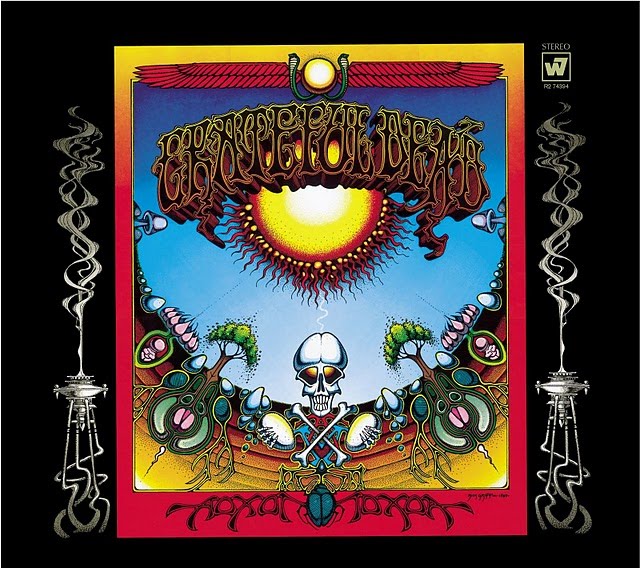
Disco: Aoxomoxoa
Productor: Grateful Dead

HISTORIA

"China Cat Sunflower" is a song performed by the Grateful Dead which was first recorded for their third studio album Aoxomoxoa. The lyrics were written by Robert Hunter and the music composed by Jerry Garcia. The song is typically sung by Jerry Garcia. The first live recording of this song appeared on Europe '72, paired (as was typical) with "I Know You Rider". Lyrically, this song has many literary references, including Lewis Carroll's Alice in Wonderland, George Herriman's Krazy Kat, and Dame Edith Sitwell's "Polka".

1st mix 4:20 rmx 3:40 Dry drum ratatat and guitar noises, becomes china-lick and song..Jerry vocal phased and multiplies. Multiple background vocal “la-la-la’s”. 1:00 Tim piano licks start appearing and plays constant fills during next verse as vocal starts phasing and modulating. Nice organ fills at 2:05 and 2:20, last verse vocal very phased almost disappears at beginning. Last words ..”Queen of Chinee..”followed by buried “chuey” repeated at least a couple times on the beat. Outtro jam doesn’t fade; just keeps going like a Viola Lee type of thing with “China Cat Sunflower” vocals until band grinds to halt, followed by loose vocals, organ and guitar licks.


DATOS DE LA GRABACIÓN


Duración: 04:15
Año: 1969
Formato: L.P.
A la venta: 20/06/1969
Disquera: Warner Bros.


MÚSICOS

Jerry Garcia - guitarra y voz
Bob Weir - guitarra y voz
Phil Lesh - bajo y voz
Mickey Hart - batería y percusión
Tom Constanten - teclados
Ron McKernan - Pigpen


ESCUCHA LA ROLA


LETRA

Original
Traducción
Look for awhile at the China Cat Sunflower
proud-walking jingle in the midnight sun
Copper-dome Bodhi drip a silver kimono
like a crazy-quilt stargown
through a dream night wind

Krazy Kat peeking through a lace bandana
like a one-eyed Cheshire
like a diamond-eye Jack
A leaf of all colors plays
a golden string fiddle
to a double-e waterfall over my back

Comic book colors on a violin river
crying Leonardo words
from out a silk trombone
I rang a silent bell
beneath a shower of pearls
in the eagle wing palace
of the Queen Chinee


EL L.P. QUE CONTIENE LA ROLA


LADO A
1. "St. Stephen"
2. "Dupree's Diamond Blues"
3. "Rosemary"
4. "Doin' That Rag"
5. "Mountains of the Moon"


LADO B
1. "China Cat Sunflower"
2. "What's Become of the Baby"
3. "Cosmic Charlie"


Aoxomoxoa is the third studio album by the Grateful Dead. It was originally titled Earthquake Country. Many Deadheads consider this era of the Dead to be the experimental apex of the band's history. It is also the first album with Tom Constanten as an official member of the band. Rolling Stone, upon reviewing the album, mentioned that "no other music sustains a lifestyle so delicate and loving and lifelike." The album was certified gold by the RIAA on May 13, 1997.

The title of the album is a palindrome created by cover artist Rick Griffin and lyricist Robert Hunter. According to the audio version of the Rock Scully memoir, Living with the Dead (read by the author and former Dead co-manager himself), the title is pronounced "ox-oh-mox-oh-ah". The words "Grateful Dead" on the front of the album, written in large, flowing capital letters, are an ambigram that can also be read "we ate the acid". The artwork around the bottom edge of the album cover depicts several phallic representations.

In 1991 Rolling Stone selected Aoxomoxoa as having the eighth best album cover of all time.A five-year-old Courtney Love appears on the album's back cover.

The group had already initiated recording sessions for the album when Ampex manufactured and released the first Multitrack recording machine offering 16 tracks of recording and playback (model number MM-1000). This doubled the number of tracks the band had available when they recorded Anthem of the Sun the previous year. As a direct consequence, the band spent eight months off-and-on in the studio not only recording the album but getting used to—and experimenting with—the new technology. Garcia commented that "it was our first adventure with sixteen-track and we tended to put too much on everything...A lot of the music was just lost in the mix, a lot of what was really there." As a result, Garcia and Lesh went back in the studio in 1971 to remix the album, removing whole sections of songs. The result, with the same catalog number, WS1790, but with much of the original's experimental character removed, can be identified by the legend on the back cover that reads, "Remixed September, 1971". The original mix was later planned for CD release, but the original master tapes could not be located. The master tapes were finally located for The Warner Bros. Studio Albums vinyl box set, marking the first time the 1969 mix has been available since the 1971 remix replaced it.

In Grateful Dead history, Aoxomoxoa had a number of firsts connected with it. It is the first album the band recorded in or near their hometown of San Francisco (at Pacific Recording Studio in nearby San Mateo, and at the similarly named Pacific High Recording Studio in San Francisco proper). It is the first studio release to include pianist Tom Constanten as a permanent member. It was also the first to have lyricist Robert Hunter as a full-time contributor to the band, thus initiating the Jerry Garcia/Robert Hunter songwriting partnership that endured for the rest of the band's existence. It was also the first time the band would put emphasis on acoustic songs, such as "Mountains of the Moon" and "Dupree's Diamond Blues." Lesh played acoustic bass for the first time, commenting that "the fun part of that was trying to play in tune with no frets to guide my fingers, just like a violin."

The lengthy sessions for the album would put the band deeper into debt with Warner Bros. Records—specifically, a total cost of $180,000 for Aoxomoxoa, it was their most ambitious and costly venture to that date. It would be the last time the band would ever run up such high studio bills.

INTÉRPRETE

The Grateful Dead: San Francisco

The Grateful Dead were an American rock band formed in 1965 in the San Francisco Bay Area. The band was known for its unique and eclectic style, which fused elements of rock, folk, bluegrass, blues, reggae, country, improvisational jazz, psychedelia, and space roc]—and for live performances of long musical improvisation. "Their music," writes Lenny Kaye, "touches on ground that most other groups don't even know exists." These various influences were distilled into a diverse and psychedelic whole that made the Grateful Dead "the pioneering Godfathers of the jam band world." They were ranked 55th in the issue The Greatest Artists of all Time by Rolling Stone magazine.

The fans of the Grateful Dead, some of whom followed the band from concert to concert for years, are known as "Deadheads" and are known for their dedication to the band's music. Many referred to the band simply as "the Dead."

Phil Lesh and Jerry Garcia were brought together by Gert Chiarito in 1964 to perform on The Midnight Special, her Saturday night radio program on KPFA, Berkeley.

The Grateful Dead began their career as the Warlocks, a group formed in early 1965 from the remnants of a Palo Alto jug band called Mother McCree's Uptown Jug Champions. The band's first show was at Magoo's Pizza in suburban Menlo Park, California on May 5, 1965. They were still known as the Warlocks although the Velvet Underground were also using that name on the east coast. The show was not recorded and not even the set list has been preserved. The band changed its name after finding out that another band of the same name had signed a recording contract (not The Velvet Underground who by then had also changed their name). The first show under the new name Grateful Dead was in San Jose, California on December 4, 1965, at one of Ken Kesey's Acid Tests. Earlier demo tapes have survived, but the first of over 2,000 concerts known to have been recorded by the band's fans was a show at the Fillmore Auditorium in San Francisco on January 8, 1966. Later on that month, the Grateful Dead played at the Trips Festival, an early psychedelic rock show.

The charter members of the Grateful Dead were: banjo and guitar player Jerry Garcia, guitarist Bob Weir, bluesman organist Ron "Pigpen" McKernan, the classically trained bassist Phil Lesh and drummer Bill Kreutzmann (who then used the stage name Bill Sommers.) Lesh was the last member to join the Warlocks before they became the Grateful Dead: he replaced Dana Morgan Jr. who had played bass for a few gigs. With the exception of McKernan, the core of the band stayed together for 30 years, until Garcia's death in 1995.

The name "Grateful Dead" was chosen from a dictionary. According to Phil Lesh, in his biography, "...[Jerry Garcia] picked up an old Britannica World Language Dictionary...[and]...In that silvery elf-voice he said to me, 'Hey, man, how about the Grateful Dead?'" The definition there was "the soul of a dead person, or his angel, showing gratitude to someone who, as an act of charity, arranged their burial." According to Alan Trist, director of the Grateful Dead's music publisher company Ice Nine, Garcia found the name in the Funk & Wagnalls Folklore Dictionary, when his finger landed on that phrase while playing a game of "dictionary". In the Garcia biography, Captain Trips, author Sandy Troy states that the band was smoking the psychedelic DMT at the time. The term "grateful dead" appears in folktales of a variety of cultures. In the summer of '69, Phil Lesh told another version of the story to Carol Maw, a young Texan visiting with the band in Marin County who also ended up going on the road with them to the Fillmore East and Woodstock. In this version, Phil said, "Jerry found the name spontaneously when he picked up a dictionary and the pages fell open. The words 'grateful' and 'dead' appeared straight opposite each other across the crack between the pages in unrelated text."

Other supporting personnel who signed on early included Rock Scully, who heard of the band from Kesey and signed on as manager after meeting them at the Big Beat Acid Test; Stewart Brand, "with his side show of taped music and slides of Indian life, a multimedia presentation" at the Big Beat and then, expanded, at the Trips Festival; and Owsley Stanley, the "Acid King" whose LSD supplied the tests and who, in early 1966, became the band's financial backer, renting them a house on the fringes of Watts and buying them sound equipment. "We were living solely off of Owsley's good graces at that time.... [His] trip was he wanted to design equipment for us, and we were going to have to be in sort of a lab situation for him to do it," said Garcia.

One of the group's earliest major performances in 1967 was the Mantra-Rock Dance—a musical event held on January 29, 1967 at the Avalon Ballroom by the San Francisco Hare Krishna temple. The Grateful Dead performed at the event along with the Hare Krishna founder Bhaktivedanta Swami, poet Allen Ginsberg, bands Moby Grape and Big Brother and the Holding Company with Janis Joplin, donating proceeds to the Krishna temple. The band's first LP, The Grateful Dead, was released on Warner Brothers in 1967.

Classically trained trumpeter Phil Lesh played bass guitar. Bob Weir, the youngest original member of the group, played rhythm guitar. Ron "Pigpen" McKernan played keyboards and harmonica until shortly before his death in 1973 at the age of 27. Garcia, Weir and McKernan shared the lead vocal duties more or less equally; Lesh only sang a few leads but his tenor was a key part of the band's three-part vocal harmonies. Bill Kreutzmann played drums, and in September 1967 was joined by a second drummer, New York native Mickey Hart, who also played a wide variety of other percussion instruments.

The year 1970 included tour dates in New Orleans, Louisiana, where the band performed at The Warehouse for two nights. On January 31, 1970, the local police raided their hotel on Bourbon Street in the French Quarter, and arrested and charged a total of 19 people with possession of various drugs. The second night's concert was performed as scheduled after bail was posted. Eventually the charges were dismissed, with the exception of those against sound engineer Owsley Stanley, who was already facing charges in California for manufacturing LSD. This event was later memorialized in the lyrics of the song "Truckin'", a single from American Beauty which reached number 64 on the charts.

Moonlight on Vermont - Captain Beefheart & His Magic Band


Rola: Moonlight on Vermont
Traducción: Brillo de luna en Vermont
Intérprete: Captain Beefheart & His Magic Band
Compositor: Don Van Vliet, Herb Bermann
Disco: Trout Mask Replica
Productor: Frank Zappa

HISTORIA

"Moonlight in Vermont" is a popular song about the U.S. state of Vermont, written by John Blackburn and Karl Suessdorf and published in 1943.

Captain Beefheart recorded a song called "Moonlight on Vermont" for his album Trout Mask Replica (1969), which could be considered a parody of this song.


DATOS DE LA GRABACIÓN


Duración: 03:59
Año: 1969
Formato: L.P.
A la venta: 16/06/1969
Disquera: Reprise


MÚSICOS

Don Van Vliet (Captain Beefheart) – voz, saxofones tenor y soprano, clarinete bajo, musette, corno de caza
Bill Harkleroad (Zoot Horn Rollo) – guitarra slide y flauta
Jeff Cotton (Antennae Jimmy Semens) – "guitarra steel
Victor Hayden (The Mascara Snake) – clarinete bajo y voces adicionales
Gary "Magic" Marker – bajo
John French (Drumbo) – batería y percusión


ESCUCHA LA ROLA


LETRA

Original
Traducción
Moonlight on Vermont affected everybody
Even Mrs. Wooten, well, as little Nitty
Even lifebuoy floatin'
With his lil' pistol showin'
With his lil' pistol Totin'

Well, that goes to show you what, uh, moon can do
No more bridge from Tuesday to Friday
Everybody's gone high society
Hope lost his head and got off on alligators

Somebody's leavin' peanuts on the curbings
For, uh, white elephant escaped from zoo with love
Goes to show what, uh, moon can do

Moonlight on Vermont
Well, it did it for Lifebuoy
And it did it t' you
And it did it t' zoo
And it can do it for me
And it can do it for you

Moonlight on Vermont
Gimme dat ole time religion
Don't gimme no affliction

Dat ole time religion is good enough for me
And it's good enough for you
Well, come out to show dem

Come out to show dem

Gimme dat ole time religion
It's good enough for me

Without yer new affliction
Don't need yer new restrictions
Gimme dat ole time religion
It's good enough for me

Moonlight on Vermont


EL L.P. QUE CONTIENE LA ROLA

VERSIÓN INGLESA

LADO A
1. "Frownland"
2. "The Dust Blows Forward 'n the Dust Blows Back"
3. "Dachau Blue"
4. "Ella Guru"
5. "Hair Pie: Bake 1"
6. "Moonlight on Vermont"


LADO B
1. "Pachuco Cadaver"
2. "Bills Corpse"
3. "Sweet Sweet Bulbs"
4. "Neon Meate Dream of a Octafish
5. "China Pig"
6. "My Human Gets Me Blues"
7. "Dali's Car"


LADO C
1. "Hair Pie: Bake 2"
2. "Pena"
3. "Well"
4. "When Big Joan Sets Up"
5. "Fallin' Ditch"
6. "Sugar 'n Spikes"
7. "Ant Man Bee"


LADO D
1. "Orange Claw Hammer"
2. "Wild Life"
3. "She's Too Much for My Mirror"
4. "Hobo Chang Ba"
5. "The Blimp (mousetrapreplica)"
6. "Steal Softly thru Snow"
7. "Old Fart at Play"
8. "Veteran's Day Poppy"


Critically acclaimed as Van Vliet's magnum opus,[59] Trout Mask Replica was released as a 28 track double album in June 1969 on Frank Zappa's newly formed Straight Records label. First issues, in the USA, were auto-coupled and housed in the black 'Straight' liners along with a 6-page lyric sheet illustrated by The Mascara Snake. A school-age portrait of Van Vliet appears on the front of this sheet, whilst the cover of the gatefold enigmatically shows Beefheart in a 'Quaker' hat, obscuring his face with the head of a fish. The fish is a carp - arguably a 'replica' for a trout, photographed by Cal Schenkel. The inner spread 'infra-red' photography is by Ed Caraeff, whose Beefheart vacuum cleaner images from this session also appear on Zappa's Hot Rats release (a month earlier) to accompany "Willie The Pimp" lyrics sung by Vliet. Alex St. Clair had now left the band and, after Junior Madeo from The Blackouts was considered, the role was filled by Bill Harkleroad. Bassist Jerry Handley had also departed, with Gary Marker stepping in. Thus the long rehearsals for the album began in the house on Ensenada Drive in Woodland Hills, L.A., that would become the infamous 'Magic Band House'.

The Magic Band began recordings for Trout Mask Replica with bassist Gary 'Magic' Marker at T.T.G. (on "Moonlight On Vermont" and "Veteran's Day Poppy"), but later enlisted bassist Mark Boston after his departure. The remainder of the album was recorded at Whitney Studios, with some field recordings made at the house. Boston was acquainted with French and Harkleroad via past bands. Van Vliet had also begun assigning nicknames to his band members, so Harkleroad became "Zoot Horn Rollo", and Boston became "Rockette Morton", while John French assumed the name "Drumbo", and Jeff Cotton became "Antennae Jimmy Semens". Van Vliet's cousin Victor Hayden, "The Mascara Snake", performed as a bass clarinetist later in the proceedings. Vliet's girlfriend Laurie Stone, who can be heard laughing at the beginning of "Fallin' Ditch", would also became a temp typist at the Magic Band house.

Van Vliet wanted the whole band to "live" the Trout Mask Replica album. The group rehearsed Van Vliet's difficult compositions for eight months, living communally in their small rented house in the Woodland Hills suburb of Los Angeles. With only two bedrooms the band members would find sleep in various corners of one, whilst Vliet occupied the other and rehearsals were accomplished in the main living area. Van Vliet implemented his vision by completely dominating his musicians, artistically and emotionally. At various times one or another of the group members was "put in the barrel," with Van Vliet berating him continually, sometimes for days, until the musician collapsed in tears or in total submission. Drummer John French described the situation as "cultlike" and a visiting friend said "the environment in that house was positively Mansonesque." Their material circumstances were dire. With no income other than welfare and contributions from relatives, the group barely survived and were even arrested for shoplifting food (Zappa bailed them out). French has recalled living on no more than a small cup of beans a day for a month. A visitor described their appearance as "cadaverous" and said that "they all looked in poor health." Band members were restricted from leaving the house and practiced for 14 or more hours a day.

Physical assaults were encouraged at times, along with verbal degradation. Beefheart spoke of studying texts on brainwashing at a public library at about this time, and appeared to be applying brainwashing techniques to his bandmembers: sleep deprivation, food deprivation, constant negative reinforcement, and rewarding bandmembers when they attacked each other or competed with each other. At one point Cotton ran from the house and escaped for a few weeks, during which time Alex Snouffer filled in for him and helped to work up "Ant Man Bee". French, who had thrown a metal cymbal at Cotton, ran after him yelling that he too wanted to come. Cotton later returned to the house with French's mother, who took him away for a few weeks, but he later felt compelled to return, as did Cotton. Mark Boston at one point hid clothes in a field across the street, planning his own getaway.

John French's 2010 book Through the Eyes of Magic describes some of the "talks" which were initiated by his actions such as being heard playing a Frank Zappa drum part ("The Blimp (mousetrapreplica)") in his drumming shed, and not having finished drum parts as quickly as Beefheart wanted. French writes of being punched by band members, thrown into walls, kicked, punched in the face by Beefheart hard enough to draw blood, being attacked with a sharp broomstick, and eventually of Beefheart threatening to throw him out of an upper floor window. He admits complicity in similarly attacking his bandmates during "talks" aimed at them. In the end, after the album's recording, French was ejected from the band by Beefheart throwing him down a set of stairs with violence, telling him to "Take a walk, man" after not responding in a desired manner to a request to "play a strawberry" on the drums. Beefheart replaced French with drummer Jeff Bruschel, an acquaintance of Hayden. Referred to as 'Fake Drumbo' (playing on French's drumset) this final act resulted in French's name not appearing on the album credits, either as a player or arranger. Bruschel toured with the band to Europe but was replaced by the next recording.

According to Van Vliet, the 28 songs on the album were written in a single 8½ hour session at the piano, an instrument in which he had no skill in playing, an approach Mike Barnes compared to John Cage's "maverick irreverence toward classical tradition", though band members have stated that the songs were written over the course of about a year, beginning around December 1967. (The band did watch Federico Fellini's 1963 film 8½ during the creation of the album). It took the band about eight months to mold the songs into shape, with French bearing primary responsibility for transposing and shaping Vliet's piano fragments into guitar and bass lines, which were mostly notated on paper. Harkleroad in 1998 said in retrospect: "We're dealing with a strange person, coming from a place of being a sculptor/painter, using music as his idiom. He was getting more into that part of who he was instead of this blues singer." The band had rehearsed the songs so thoroughly that the instrumental tracks for 21 of the songs were recorded in a single four and a half hour recording session. Van Vliet spent the next few days overdubbing the vocals. The album's title came from its cover artwork, which was photographed and designed by Cal Schenkel; Van Vliet wearing the raw head of a carp, bought from a local fish market and fashioned into a mask by Schenkel.

Trout Mask Replica incorporated a wide variety of musical styles, including blues, avant garde/experimental, and rock. The relentless practice prior to recording blended the music into an iconoclastic whole of contrapuntal tempos, featuring slide guitar, polyrhythmic drumming (with French's drums and cymbals covered in cardboard), honking saxophone and bass clarinet. Van Vliet's vocals range from his signature Howlin' Wolf inspired growl to frenzied falsetto to laconic, casual ramblings.

The instrumental backing was effectively recorded live in the studio, while Van Vliet overdubbed most of the vocals in only partial synch with the music by hearing the slight sound leakage through the studio window. Zappa said of Van Vliet's approach, "[it was] impossible to tell him why things should be such and such a way. It seemed to me that if he was going to create a unique object, that the best thing for me to do was to keep my mouth shut as much as possible and just let him do whatever he wanted to do whether I thought it was wrong or not."

Van Vliet used the ensuing publicity, particularly with a 1970 Rolling Stone interview with Langdon Winner, to promulgate a number of myths which were subsequently quoted as fact. Winner's article stated, for instance, that neither Van Vliet nor the members of the Magic Band ever took drugs, but Harkleroad later contradicted this. Van Vliet claimed to have taught both Harkleroad and Boston to play their instruments from scratch; in fact the pair were already accomplished young musicians before joining the band. Last, Van Vliet claimed to have gone a year and half without sleeping. When asked how this was possible, he claimed to have only eaten fruit.

Critic Steve Huey of Allmusic writes that the album's influence "was felt more in spirit than in direct copycatting, as a catalyst rather than a literal musical starting point. However, its inspiring reimagining of what was possible in a rock context laid the groundwork for countless experiments in rock surrealism to follow, especially during the punk and New Wave era." In 2003, the album was ranked fifty-eighth by Rolling Stone in their list of The 500 Greatest Albums of All Time: "On first listen, Trout Mask Replica sounds like raw Delta blues", with Beefheart "singing and ranting and reciting poetry over fractured guitar licks. But the seeming sonic chaos is an illusion—to construct the songs, the Magic Band rehearsed twelve hours a day for months on end in a house with the windows blacked out. (Producer Frank Zappa was then able to record most of the album in less than five hours.) Tracks such as "Ella Guru" and "My Human Gets Me Blues" are the direct predecessors of modern musical primitives such as Tom Waits and PJ Harvey". Guitarist Fred Frith noted that during this process "forces that usually emerge in improvisation are harnessed and made constant, repeatable."

Critic Robert Christgau gave the album a B+, saying that "I find it impossible to give this record an A because it is just too weird. But I'd like to. Very great played at high volume when you're feeling shitty, because you'll never feel as shitty as this record". BBC disc jockey John Peel said of the album: "If there has been anything in the history of popular music which could be described as a work of art in a way that people who are involved in other areas of art would understand, then Trout Mask Replica is probably that work."

INTÉRPRETE

Captain Beefheart & His Magic Band: Glendale

Don Van Vliet (January 15, 1941 – December 17, 2010) was an American musician, singer-songwriter and artist best known by the stage name Captain Beefheart. His musical work was conducted with a rotating ensemble of musicians called The Magic Band, active between 1965 and 1982, with whom he recorded 12 studio albums. Noted for his powerful singing voice with its wide range,[4] Van Vliet also played the harmonica, saxophone and numerous other wind instruments. His music blended rock, blues and psychedelia with free jazz, avant-garde and contemporary experimental composition. Beefheart was also known for exercising an almost dictatorial control over his supporting musicians, and for often constructing myths about his life.

During his teen years in Lancaster, California, Van Vliet developed an eclectic musical taste and formed "a mutually useful but volatile" friendship with Frank Zappa, with whom he sporadically competed and collaborated. He began performing with his Captain Beefheart persona in 1964 and joined the original Magic Band line-up, initiated by Alexis Snouffer, in 1965. The group drew attention with their cover of Bo Diddley's "Diddy Wah Diddy", which became a regional hit. It was followed by their acclaimed debut album Safe As Milk, released in 1967 on Buddah Records. After being dropped by two consecutive record labels, they signed to Zappa's Straight Records. As producer, Zappa granted Beefheart the unrestrained artistic freedom in making 1969's Trout Mask Replica, ranked fifty-eighth in Rolling Stone magazine's 2003 list of the 500 greatest albums of all time. In 1974, frustrated by lack of commercial success, he released two albums of more conventional rock music that were critically panned; this move, combined with not having been paid for a European tour, and years of enduring Beefheart's abusive behavior, led the entire band to quit. Beefheart eventually formed a new Magic Band with a group of younger musicians and regained contemporary approval through three final albums: Shiny Beast (Bat Chain Puller) (1978), Doc at the Radar Station (1980) and Ice Cream for Crow (1982).

Van Vliet has been described as "one of modern music's true innovators" with "a singular body of work virtually unrivalled in its daring and fluid creativity". Although he achieved little commercial or mainstream critical success, he sustained a cult following as a "highly significant" and "incalculable" influence on an array of New Wave, punk, post-punk, experimental and alternative rock musicians. Known for his enigmatic personality and relationship with the public, Van Vliet made few public appearances after his retirement from music (and from his Beefheart persona) in 1982. He pursued a career in art, an interest that originated in his childhood talent for sculpture. His expressionist paintings and drawings command high prices, and have been exhibited in art galleries and museums across the world. Van Vliet died in 2010 after many years of suffering from multiple sclerosis.

Among those who took notice were The Beatles. Both John Lennon and Paul McCartney were known as great admirers of Beefheart. Lennon displayed two of the album's promotional 'baby bumper stickers' in the sunroom at his home. Later, the Beatles planned to sign Beefheart to their experimental Zapple label (plans that were scrapped after Allen Klein took over the group's management). Van Vliet was often critical of the Beatles, however. He considered the lyric "I'd love to turn you on", from their song "A Day in the Life", to be ridiculous and conceited. Tiring of their "lullabies", he lampooned them with the Strictly Personal song "Beatle Bones 'n' Smokin' Stones", that featured the sardonic refrain of "strawberry fields, strawberry fields forever". It should also be noted that 'strawberry fields' could also be an oblique reference to a form of LSD circulating at the time. The album's five 'acid stamps' and first track "Ah Feel like Ahcid" may underline this, whilst 'Smokin' Stones' is probably a 'pro comment' on the contrasting rhythm and blues style of the Rolling Stones. Vliet spoke badly of Lennon after getting no response when he sent a telegram of support to him and wife Yoko Ono during their 1969 "Bed–In for peace". Van Vliet did meet McCartney in Cannes during the Magic Band's 1968 tour of Europe, though McCartney later claimed to have no recollection of this meeting.